In 2026, the most meaningful shifts in mobility innovation are not single technologies. They are new operating patterns. Cities are building infrastructure that behaves like software. Transit operators are modernizing planning and control rooms, then extending that intelligence to passengers through calmer, more human interfaces.
At Mimic Mobility, we sit where those patterns collide. Real-time simulation to rehearse change, spatial capture to ground it in reality, and interface design that works under pressure. If you are building for cities, fleets, airports, or rail, our work in 3d simulations reflects the same demand we see across projects. Make complex systems legible, testable, and ready for day-one operations.
This article maps the 2026 trends shaping decision-making for city teams and transit operators, and what these trends mean for operations, passenger experience, safety validation, and deployment pace.
Table of Contents
The 2026 operating layer for urban mobility
A clear 2026 trend is that cities are treating operations as a continuous loop, not a seasonal study. The loop is simple. Sense the network, infer what is happening, decide what to do, then communicate clearly. Agencies are increasingly exploring digital twins to test scenarios and improve resilience, especially around maintenance, disruption, and extreme events.
What changes in 2026 is the expectation of timeliness. Not just quarterly reporting, but decisions updated daily, sometimes hourly, tied to service plans, incidents, and demand spikes.
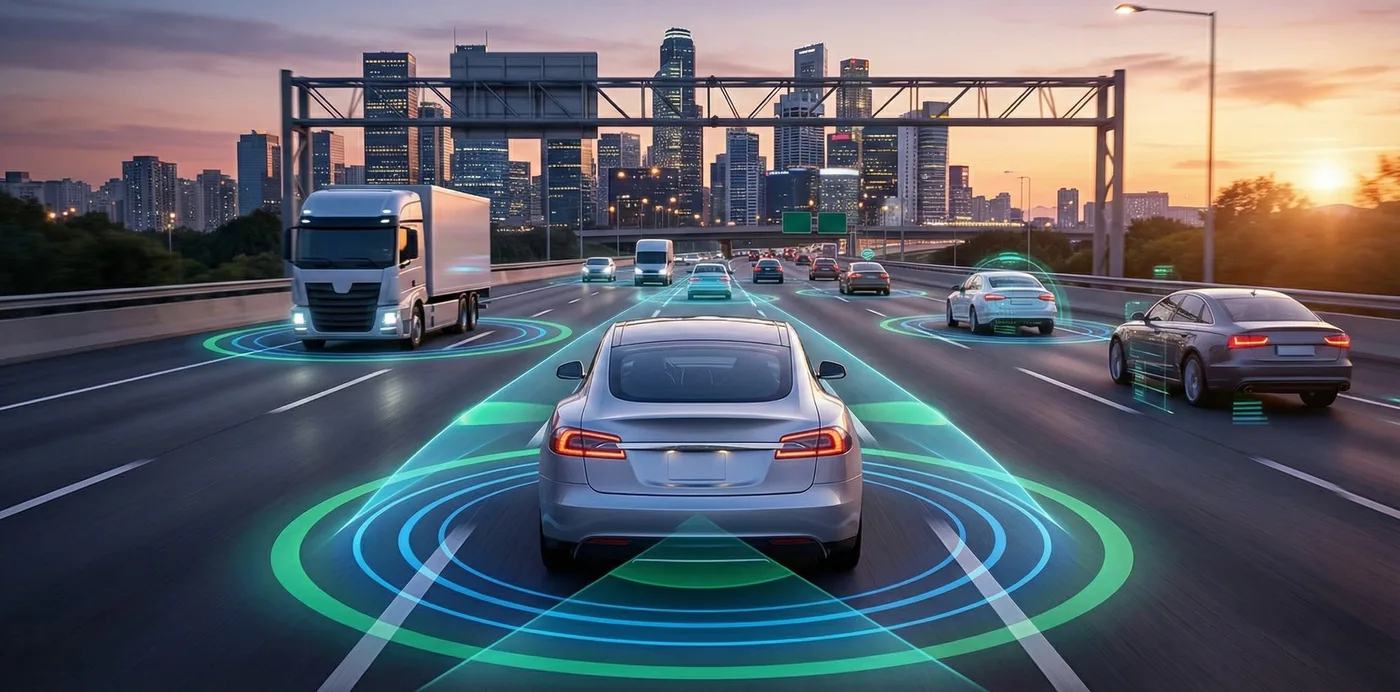
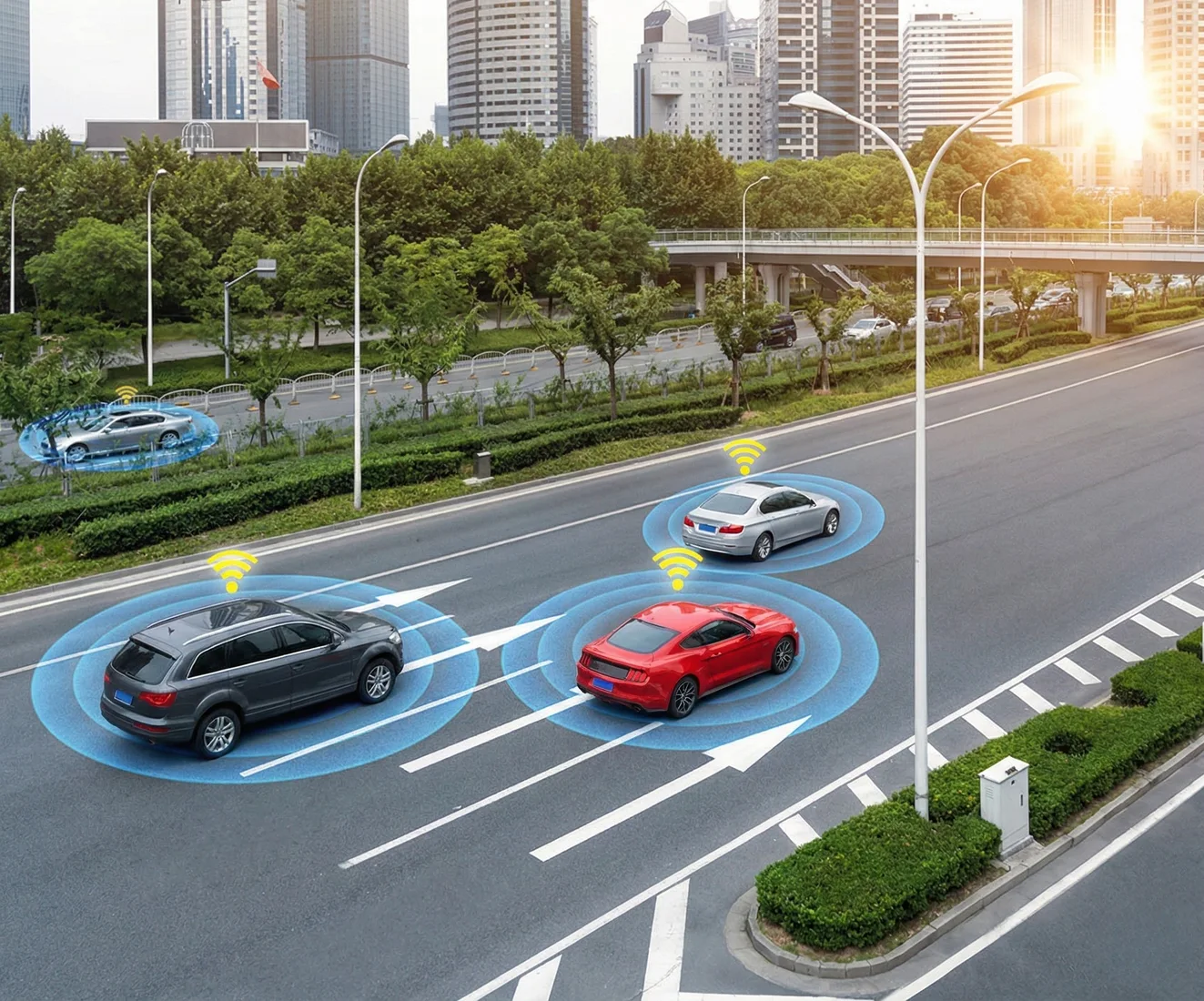
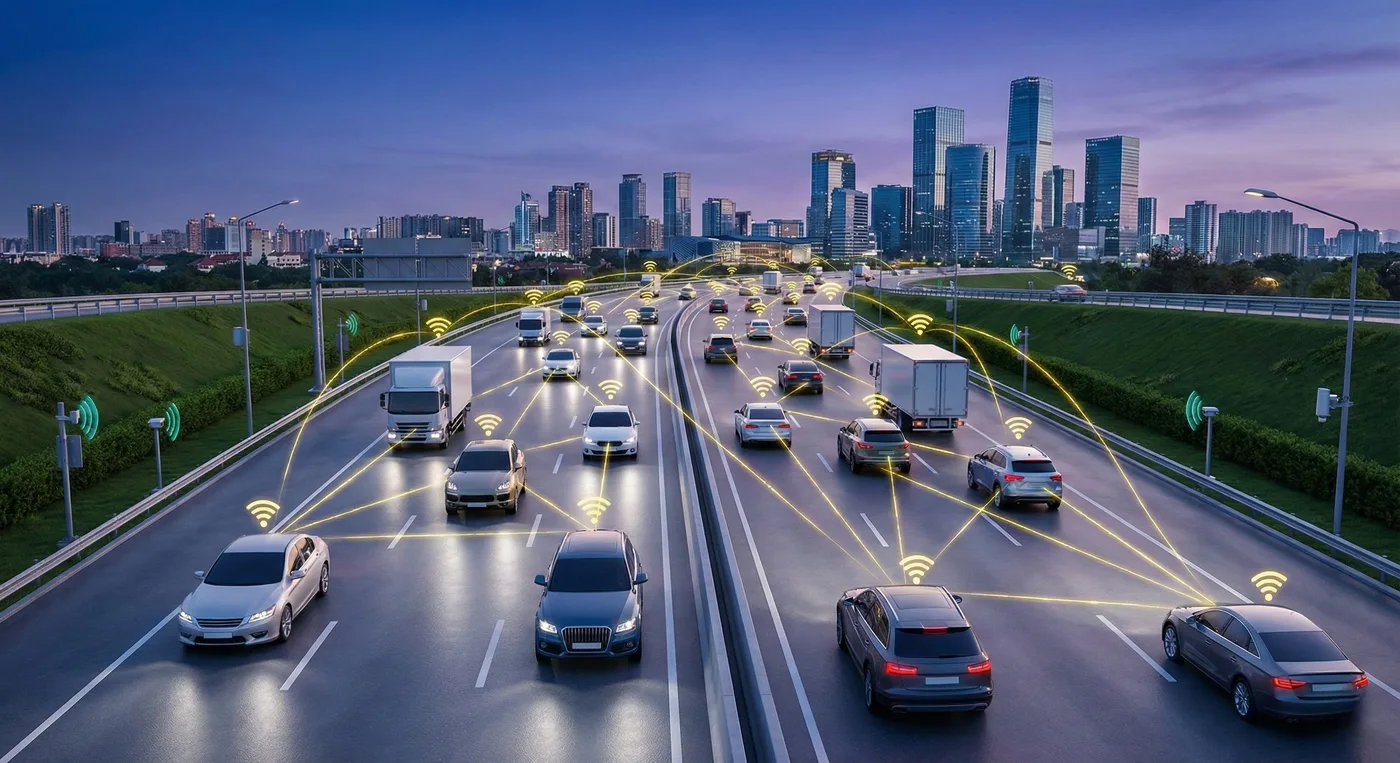
Signal layer: V2X deployments and connected corridors push more real-world state into operations, including speed guidance, hazard messaging, and intersection context.
Curb layer: smart curb management moves from policy talk to measurable operations, with digitized inventories, dynamic rules, and utilization tracking.
Fleet layer: Vehicle telemetry and schedule adherence become planning inputs, not just compliance reports, especially when staffing and reliability pressures rise.
Freight layer: Cities and operators are increasingly forced to model delivery demand, dwell time, and loading conflicts as first-class network behaviors, not edge cases.
Security layer: As mobility data platforms connect more systems, cybersecurity and identity management become operational constraints, not IT checklists.
For transit operators, this operating layer changes how success is measured. Headways and reliability, not only on-time performance. Passenger confidence, not only throughput. And a clear record of what changed, when, and why.
Many teams underestimate how quickly pilots become permanent expectations. That is why strong foundations in sensing, capture, and integration matter as much as the front-end experience, including the tooling approach we outline in tech.
Interfaces shift from apps to ambient assistance
The next wave of mobility innovation is interface-first. Not flashy, but dependable. People want help at the exact moment they feel uncertainty. In a vehicle, that might be confusion in a construction zone. In a station, it might be a platform change during irregular operations. In a depot, it might be a technician trying to diagnose a recurring fault.
Three interface shifts are shaping 2026 deployments.
Cab experience: In-vehicle assistants move beyond navigation prompts into trip context, vehicle status, and driver workload support. They also enable personalization based on preferences and habits, like preferred routes, language, accessibility settings, and alert style.
Public space: Public-facing kiosks evolve into guided service points, with multilingual support, validation help, disruption messaging, and crowd-friendly wayfinding that does not break under demand spikes.
Service voice: Conversational AI avatars become a practical delivery mechanism for ticketing, routing questions, customer support, and escalation workflows, especially when staff are stretched.
Operationally, this is not only about customer experience. It is about controlling misinformation during disruptions. It is about consistent emergency communication workflows. And it is about keeping instructions accessible when stress is high.
This is also where staffing realities show up. When service gaps are attributed to workforce availability, interface design becomes part of resilience. The system needs to explain what is happening, what to do next, and what alternatives exist, without adding friction.
Comparison table: 2026 capabilities and what cities must operate
2026 capability | What does it change for urban mobility | What cities and transit operators must operate daily | Common failure mode |
Digital twin operations | Faster scenario testing, better disruption playbooks | Data pipelines, validation metrics, mand odel governance | Treating models as one-off studies |
Smart curb management | Less conflict at pick-up, delivery, and bus stops | Curb inventory, rule enforcement, and performance reporting | Digitizing rules without enforcement |
V2X corridors | More proactive safety and response | Roadside maintenance, message governance, privacy controls | Pilot corridors that never scale |
In-vehicle assistants | Better guidance and reduced uncertainty | Content updates, localization, escalation logic | Helpful demos that fail in edge cases |
Public-facing kiosks | Passenger support at decision points | Multilingual content, uptime monitoring, staff handoff | Kiosks that cannot handle disruption surges |
Workforce-aware scheduling | More stable service under constraints | Planning tools, training pipelines, change management | Optimizing schedules without operator buy-in |
AV pilots and autonomous shuttles | New service patterns in controlled areas | ODD definition, remote support, incident response | Underestimating governance and liability |
Autonomous deployments continue to expand across regions, with multiple robotaxi partnerships and trials targeting 2026 timelines, which keeps pressure on cities to define governance and operating boundaries clearly.
Applications In Mobility
These trends become real when they connect to specific workflows, not generic roadmaps.
Station guidance and validation: Use AI avatars to deliver multilingual support for schedules, platform directions, ticketing, and service recovery in busy concourses.
Airport and interchange support: Deploy human-centered public-facing kiosks for irregular operations, rebooking guidance, and step-by-step navigation, aligned with patterns we break down in ai kiosks for airports and mobility centers.
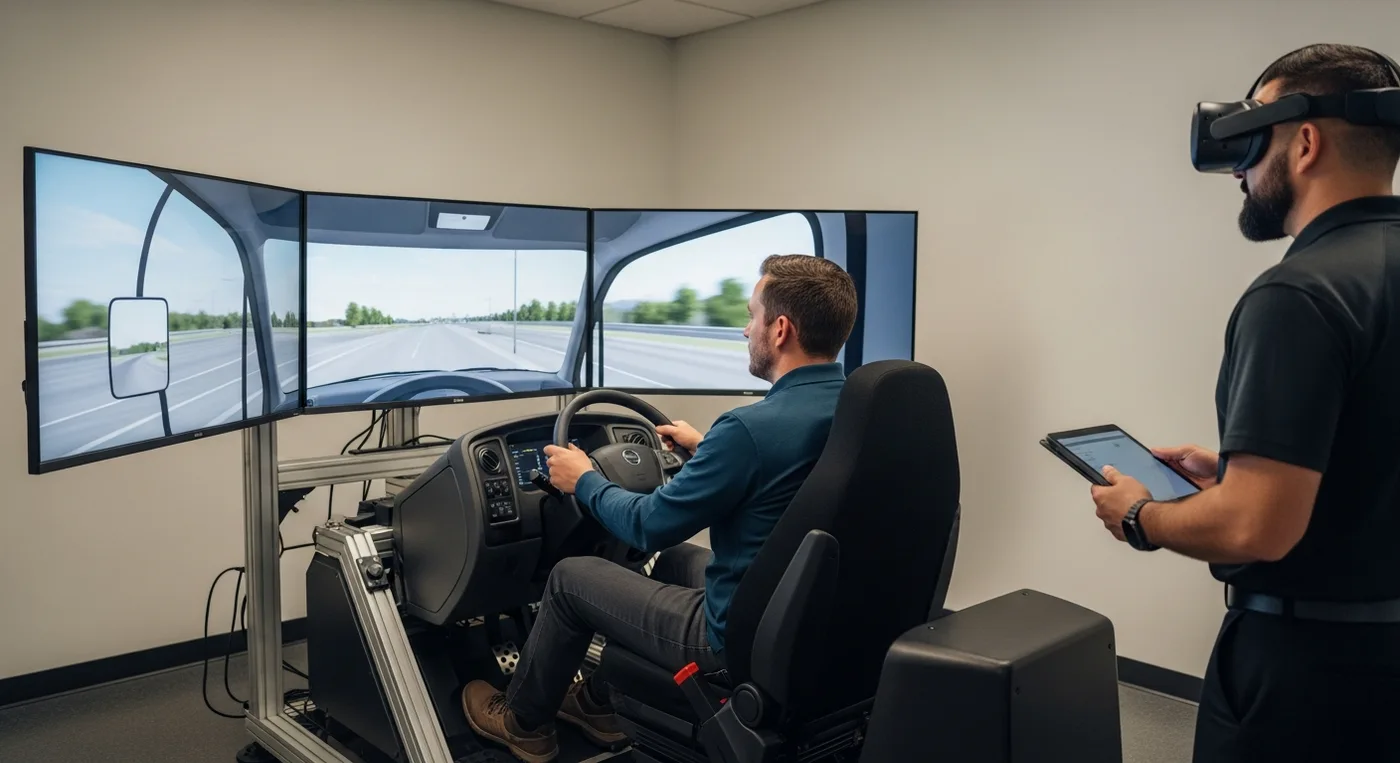
Fleet readiness and incident rehearsal: Build immersive training that uses real routes, depot layouts, and scenario stressors, similar to the approach in virtual driving simulation for fleets.
Live routing and passenger updates: Connect mobility data platforms to disruption signals and deliver consistent guidance using the integration model described in ai navigation assistant systems.
Intersection and corridor validation: Combine real-time simulation with V2X pilots to test timing strategies, emergency priority, and safety messaging before field rollout.
Benefits
The practical upside of 2026’s mobility innovation trends is that cities can change faster without becoming brittle.
Resilience: real-time simulation enables quicker response planning for disruptions, weather, and demand spikes.
Legibility: mobility data platforms make operational decisions traceable across teams, from planning to street operations.
Accessibility: conversational AI avatars and public-facing kiosks make guidance usable for more riders, across languages and abilities.
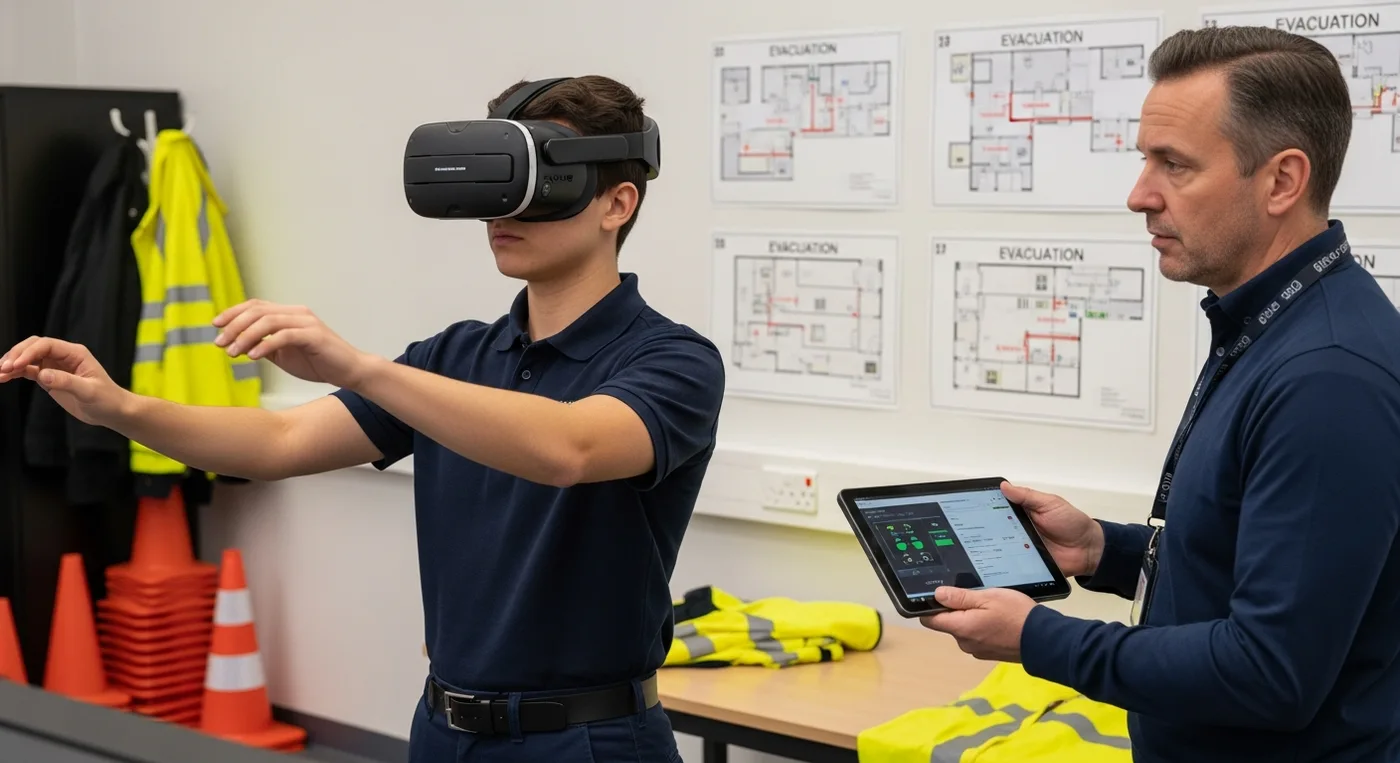
Readiness: immersive training reduces the gap between policy decisions and frontline reality.
Safety framing: facial tracking and eye tracking can contribute attention and fatigue signals as part of broader safety validation, when governed responsibly.
Speed to validate: virtual prototyping reduces the cost of testing new layouts, signage, and procedures before physical changes.
Considerations For Mobility Teams
Scaling these trends in 2026 requires operational honesty. The hard parts are not the demos. The hard parts are integration, governance, and human adoption.
Ownership: Assign clear operators for mobility data platforms, model updates, content updates, and escalation pathways.
Ground truth: Use 3D scanning to keep geometry and facility layouts aligned with reality, especially in terminals and curb zones.
Behavior realism: Apply motion capture and driver behavior modeling when you need believable training scenarios or HMI evaluation, not only for visuals.
Validation discipline: Define what “works” means, including reliability metrics, queue limits, passenger wayfinding success, and response-time targets.
Privacy controls: Treat sensor data, especially anything involving facial tracking or eye tracking, as high sensitivity with minimization and access controls.
Rollout strategy: Plan for partial deployment states, including hybrid staffing, phased corridors, and fallbacks when automation is unavailable.
Future Outlook
By late 2026, the gap between planning and operations will keep shrinking. Digital twin approaches will be expected to ingest live signals and output operational recommendations, not only produce quarterly reports.
At the same time, city experiences will become more multimodal and more human. In-vehicle assistants will blend route context, vehicle health, and passenger needs. Public-facing kiosks will take on a calmer role during disruption peaks, with consistent guidance and clean handoff to staff. V2X will continue to mature as a corridor capability, creating new expectations around real-time messaging, interoperability, and trust.
For Mimic Mobility, the future outlook is a tighter loop between what we can simulate and what people actually experience. More virtual prototyping before concrete is poured. More immersive training before procedures hit the frontline. More interface design that treats uncertainty as the core problem, not an edge case.
Conclusion
In 2026, mobility innovation will become operational. Cities and transit operators are shifting from isolated pilots to integrated systems that can sense, decide, and communicate under real conditions. The winners will be teams that connect data, simulation, and human interfaces into one coherent pipeline.
Mimic Mobility builds in that space. We help mobility teams test change in believable environments, design assistance that works in the moment, and ground it all in capture, sensing, and operational reality. If your 2026 roadmap includes digital twins, connected corridors, station guidance, or training at scale, the best next step is to treat experience and operations as one system.
FAQs
What makes 2026 different for mobility innovation?
The difference is operational expectation. Agencies want continuous updates, scenario testing, and clear passenger communication, not one-time studies.
Are mobility data platforms replacing traditional planning tools?
They are becoming the connective tissue. Planning tools still matter, but mobility data platforms increasingly orchestrate feeds, validation, dashboards, and cross-team decision workflows.
Where do public-facing kiosks fit if everyone has a smartphone?
They serve the moment of uncertainty, at the place the decision happens, for people who need accessible, multilingual, high-trust guidance without app friction.
How should cities think about smart curb management in 2026?
As a measurable operating program, not just rules. Start with inventory and utilization, then connect policy, enforcement, and reporting using open standards.
Will autonomous shuttles and robotaxis affect cities in 2026?
Yes, even when deployments are limited. They push cities to define operating boundaries, incident response, and governance as commercial services expand.
How do in-vehicle assistants change safety and trust?
They can reduce uncertainty, but they must be designed around driver workload, clear escalation, and consistent behavior in edge cases. Personalization should never override clarity.
Where do 3D scanning and motion capture matter most?
They matter when realism drives decisions. Terminal layouts, curb conflicts, training scenarios, and HMI evaluation benefit when the environment and human behavior feel true.