

How many simulation scenarios does an autonomous vehicle need before it is ready for road testing?
There is no credible universal number. A defensible autonomous vehicle testing program selects enough scenarios to cover the system’s operational design domain, safety requirements, known hazards, foreseeable misuse, software changes, and statistically meaningful variations. The right target is measured coverage and residual risk—not an impressive raw scenario count.
This guide gives engineering, safety, and mobility teams a practical way to set that scope. It explains how to move from a broad question to a traceable scenario library, how to vary conditions without creating meaningless combinations, and how to decide when virtual evidence is strong enough to justify controlled physical testing. It complements Mimic Mobility’s autonomous vehicle simulation validation guide with a direct, question-led planning method.
Table of Contents
How Many Simulation Scenarios Are Needed?

The direct answer is: as many scenarios as are required to demonstrate coverage of the intended operating domain and the safety claims attached to the current release. For an early perception prototype, that may mean hundreds of carefully designed scenario families. A production-intent automated-driving function can require thousands of logical scenarios and millions of parameterized concrete runs. The useful unit is not the individual run; it is the evidence-producing scenario family linked to a requirement, hazard, failure mode, or decision.
A raw total can be misleading because one scenario may be replayed ten thousand times with negligible variation, while another family explores a difficult interaction across road geometry, traffic behavior, sensor conditions, and system state. The first produces volume. The second may produce far more safety information. Teams should therefore report coverage by requirement, operational condition, hazard, behavior, parameter boundary, and software version alongside the total number of runs.
A practical program begins with the validation claim. If the claim is that a highway-pilot function maintains a safe following gap in its stated domain, the library must cover relevant speeds, curvature, lead-vehicle behavior, cut-ins, visibility, road friction, lane markings, sensor degradation, driver state, and fallback behavior. Mimic Mobility’s ADAS simulation testing plan explains how these claims fit into a broader verification workflow.
Count scenario families separately from concrete parameter combinations and repeated runs.
Link every family to at least one requirement, hazard, known failure, or coverage objective.
Prioritize boundary conditions and interaction effects instead of sampling only normal driving.
Add regression scenarios whenever a defect, near miss, or unexpected behavior is discovered.
Stop expanding a family when added runs no longer change the safety decision or reveal meaningful behavior.
This does not mean testing ends when the library stops finding new failures. It means the team has a documented reason for its scope, understands what remains untested, and can explain why the evidence is proportionate to the decision. The scenario count is an output of that reasoning, not the input.
How Do You Build Coverage from the ODD?

The operational design domain, or ODD, defines where and under which conditions the automated function is intended to operate. It may specify road classes, geography, speed ranges, weather, lighting, traffic density, lane quality, construction conditions, connectivity, and other constraints. Scenario planning turns each relevant ODD dimension into testable variables and then combines them around real driving tasks and hazards.
Start with a structured ODD inventory. For every dimension, identify nominal values, boundaries, transitions, exclusions, and degraded states. “Daylight” is not one condition; sun angle, glare, shadow, contrast, and transitions into tunnels can matter. “Rain” includes intensity, standing water, spray, reflections, wiper state, reduced friction, and sensor contamination. “Urban road” includes intersection control, lane topology, parked vehicles, vulnerable road users, delivery activity, sight obstruction, and local driving behavior.
Next, connect the ODD to functional behavior. A lane-change system needs more than a catalog of roads and weather. It needs initiating conditions, surrounding actors, gaps, relative speeds, occlusions, driver or passenger requests, map confidence, sensor confidence, and abort paths. High-quality traffic simulation data helps ground these distributions in the environment the system will actually face.
Functional scenarios describe the situation in natural language: for example, a pedestrian emerges from behind a stopped vehicle.
Logical scenarios define variables and ranges: speeds, distances, occlusion, lighting, friction, and response timing.
Concrete scenarios assign exact values so a run can be reproduced and compared.
Coverage models track which partitions, boundaries, pairs, and higher-order combinations have been exercised.
Traceability records which requirement, hazard, and software configuration each run supports.
Avoid a full Cartesian product of every variable. It explodes quickly and spends compute on implausible combinations. Use risk-based partitions, pairwise or combinatorial methods, constrained sampling, search-based testing, and targeted Monte Carlo runs. Preserve the constraints that make a scenario physically and operationally credible. When field or fleet data is available, use it to shape nominal distributions—but deliberately oversample rare, severe, and boundary conditions that natural driving would reveal too slowly.
A mobility digital twin can support this work when road networks, actors, operations, and live or historical data need to be evaluated together. The model should remain transparent about fidelity, assumptions, and the decisions it can support.
Which Edge Cases and Variations Should Be Tested?

Edge cases are not simply unusual scenes. They are conditions near the boundary of the system’s competence, ODD, assumptions, or safety envelope. Some are rare in the world but easy to anticipate, such as an emergency vehicle approaching against normal traffic flow. Others emerge from combinations: low sun, faded markings, road spray, a partially occluded cyclist, and a late cut-in may each be manageable alone but difficult together.
Build an edge-case taxonomy rather than a miscellaneous folder. Useful categories include perception ambiguity, occlusion, unusual actor appearance, aggressive or noncompliant behavior, temporary road layouts, localization uncertainty, map disagreement, sensor interference, degraded hardware, communications loss, conflicting right-of-way cues, emergency response, minimal-risk maneuvers, and recovery after an incorrect prediction or plan.
Synthetic variation is valuable because it can change weather, lighting, actors, materials, sensor noise, and trajectories while preserving labels. However, generated data must be governed. The synthetic data for mobility AI guide describes how provenance, representativeness, and validation keep synthetic evidence useful rather than decorative.
Vary one factor at a time when diagnosing a failure, then vary interacting factors when testing robustness. Use boundary sweeps around the point at which behavior changes: gap acceptance, braking onset, confidence thresholds, time-to-collision, visibility distance, localization error, or available fallback time. Search-based testing can actively look for parameter combinations that minimize safety margins, but its findings should be replayed deterministically and translated into understandable regression cases.
Normal-but-diverse traffic establishes baseline performance and prevents overfitting to dramatic cases.
Boundary cases probe ODD limits, trigger thresholds, handovers, and transitions between operating modes.
Adversarial cases search for combinations that expose perception, prediction, planning, or control weakness.
Degraded cases test sensor obstruction, stale maps, packet loss, compute delay, actuator limits, and partial failures.
Recovery cases verify that the system reaches a safe state after uncertainty, fault, or invalid assumptions.
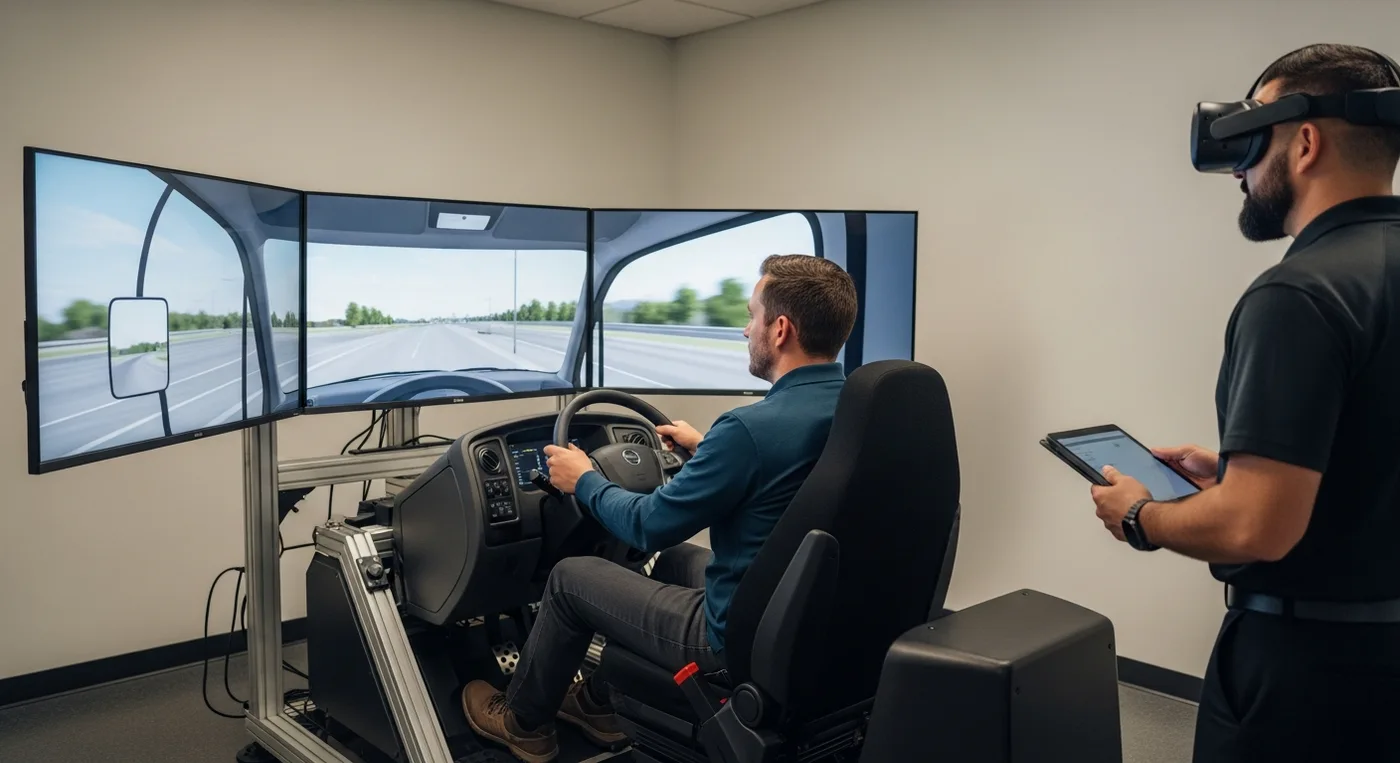
A good library also tests people, not only vehicles. Pedestrians may hesitate, reverse direction, wave another road user through, travel in groups, carry large objects, or behave differently near schools, stations, events, and work zones. Cyclists and powered two-wheelers can filter between lanes or appear from blind zones. Driver-in-the-loop work is especially useful when fallback, trust, attention, or takeover behavior matters; see the
driver-in-the-loop simulation guide for that human-factors layer.
How Should Simulation Levels and Pass Criteria Work?

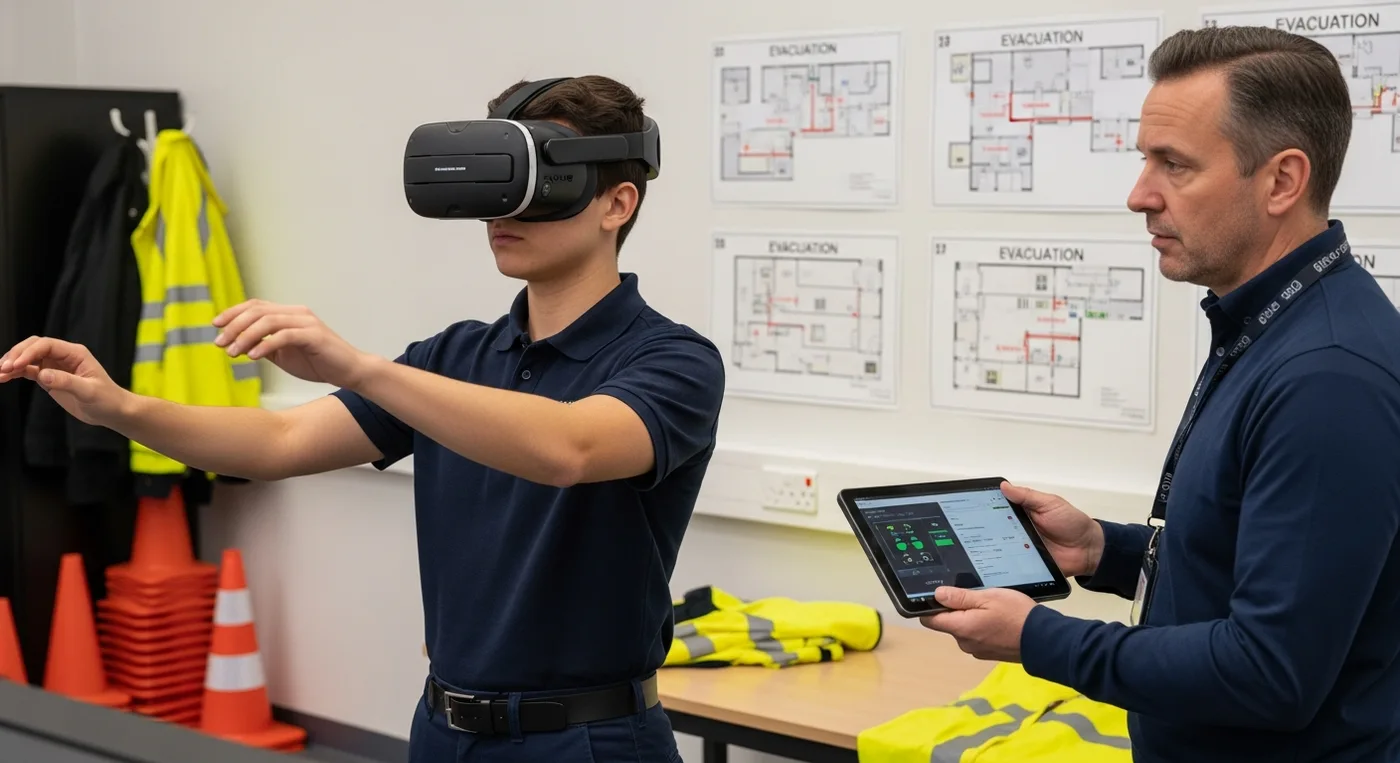
Autonomous vehicle testing usually progresses through several simulation levels. Model-in-the-loop evaluates algorithms or control logic against mathematical models. Software-in-the-loop runs production-like code in a virtual environment and supports high-speed regression. Hardware-in-the-loop connects real electronic hardware to simulated sensors, vehicles, and environments. Driver-in-the-loop adds human behavior. Vehicle-in-the-loop and controlled proving-ground work blend physical assets with virtual or instrumented scenarios.
Each level answers different questions. Fast software simulation is ideal for wide coverage, randomized variation, fault injection, and continuous integration. Hardware-in-the-loop is better for timing, interfaces, buses, compute load, and real controllers. Human-in-the-loop testing addresses attention, comprehension, trust, workload, and fallback behavior. Physical tests remain necessary for correlation, unmodeled phenomena, final hardware, sensor installation, vehicle dynamics, and road interaction.
The automotive simulation and virtual prototyping guide explains how these layers shift decisions earlier. The key is to assign each requirement to the least expensive test level that can produce credible evidence, then confirm critical claims at higher-fidelity levels.
Pass criteria must be defined before large-scale execution. They can include collision avoidance, minimum distance, lane departure, time-to-collision, rule compliance, comfort limits, takeover timing, warning timing, fault detection, fallback completion, and uncertainty behavior. Avoid a single blended score that hides severe failures behind good average performance. Use hard safety constraints, requirement-specific metrics, distribution summaries, worst-case results, confidence intervals, and documented exceptions.
Define the expected behavior and tolerated deviation for every safety-relevant scenario family.
Record scenario, map, model, sensor, software, hardware, random seed, and calibration versions.
Separate invalid simulations from valid system failures; investigate both rather than silently discarding them.
Re-run failures deterministically and create minimized regression cases where practical.
Correlate the variables that matter to the claim with physical measurements or trusted reference data.
Simulation credibility is itself a test target. Validate coordinate frames, time synchronization, actor behavior, sensor response, vehicle dynamics, latency, environmental effects, and result calculations. A beautiful 3D scene can still produce weak evidence if timing, physics, sensor models, or scenario logic are wrong. Mimic Mobility’s
3D simulation services focus on building environments and workflows around the engineering decision, not visual realism alone.
When Is an AV Ready to Move from Simulation to the Road?

An automated-driving function is ready to move to controlled physical testing when simulation has reduced the obvious, repeatable, and high-risk uncertainty enough that the next test level adds evidence rather than merely discovering basic defects. This is a gated decision, not a claim that the system is safe for unrestricted deployment.
A useful gate asks whether requirements and hazards are traced to scenario families; critical scenario families meet their pass criteria; known severe failures are resolved or formally accepted; coverage gaps are visible; model credibility is adequate for the claims made; regression performance is stable across recent builds; fallback and fault responses have been exercised; and the physical test has a clear objective, safety driver or operator plan, route or facility controls, weather limits, abort logic, and incident procedure.
For broader context, the transport simulation software guide explains how mobility teams choose platforms and connect technical testing with operational decisions. Teams working with fleets can also use predictive fleet maintenance planning to keep vehicle condition and test evidence aligned.
Proceed to a proving ground when closed-course interaction, real sensors, real dynamics, or hardware correlation is the missing evidence.
Proceed to limited public-road testing only with an approved operational plan, trained supervision, defined ODD, monitoring, and fallback controls.
Return to simulation whenever a physical run reveals a new failure, near miss, ambiguous behavior, or unmodeled condition.
Keep the scenario library inside the release process so every material change triggers relevant regression coverage.
Reassess the ODD and coverage model as routes, hardware, maps, policies, users, and operating conditions change.
The strongest programs create a closed learning loop. Field observations become reproducible simulations. Simulation failures become engineering tasks and regression scenarios. Physical correlation improves models. Release evidence shows what changed, what was retested, what passed, and what uncertainty remains. This continuous cycle is more defensible than chasing a lifetime mileage target or announcing a large scenario number without explaining its coverage.
Autonomous Vehicle Testing FAQs
Is there a minimum number of simulation scenarios required for autonomous vehicle testing?
No universal minimum applies to every system. The defensible number depends on the automated function, ODD, safety requirements, hazards, architecture, software maturity, and the evidence needed for the next decision.
What is the difference between a scenario family and a simulation run?
A scenario family describes a situation and its variable ranges. A run uses one exact set of parameter values, software versions, models, and random seeds. One family can produce many reproducible runs.
Should autonomous vehicle testing target miles or scenarios?
Use both carefully, but prioritize scenario and coverage evidence. Mileage indicates exposure; it does not prove that relevant hazards, boundaries, failures, and interactions were tested.
How are edge cases found for AV simulation?
Teams combine hazard analysis, field data, incident and defect reports, expert review, ODD boundaries, search-based testing, synthetic variation, and failures discovered during physical tests.
What is an operational design domain in autonomous driving?
The ODD defines the conditions in which an automated-driving function is intended to operate, including roads, speeds, geography, traffic, weather, lighting, infrastructure, and other constraints.
Can simulation replace real-world autonomous vehicle testing?
No. Simulation expands coverage, repeatability, safety, and speed, while controlled physical testing is still needed for correlation, real hardware, unmodeled effects, and final operational evidence.
What makes an AV simulation scenario valid?
A valid scenario has a clear purpose, credible initial conditions and actor behavior, controlled parameters, traceability, reproducibility, correct metrics, and a simulator whose fidelity supports the intended claim.
How often should the scenario library be updated?
Update it whenever the ODD, requirements, hazards, software, sensors, vehicle platform, maps, operating policy, known failures, or field observations materially change.
What should happen after a simulation finds a failure?
Confirm the run is valid, replay it deterministically, identify the cause, minimize the case if useful, fix or formally disposition the issue, and add the scenario to regression testing.
Conclusion
There is no single correct number of simulations for an autonomous vehicle. The credible answer is a traceable body of evidence: scenario families derived from the ODD and safety claims, meaningful parameter coverage, focused edge cases, validated simulation levels, explicit pass criteria, reproducible regression, and a controlled gate into physical testing.
Mimic Mobility can help turn an automated-driving question into a practical scenario library, real-time 3D environment, digital twin, or x-in-the-loop validation workflow. Explore the 3D simulation offering or contact the Mimic Mobility team to plan a focused autonomous vehicle testing program.