

How can mobility teams test millions of dangerous, rare, and fast-changing driving situations before an automated vehicle meets the public?
Autonomous vehicle simulation gives engineering teams a controlled way to test perception, planning, control, human interaction, and recovery across conditions that are costly or unsafe to recreate on demand. Its value is not simply virtual mileage. It creates traceable evidence: which scenario ran, what changed, why the system passed or failed, and whether a software update introduced a regression.
This guide explains how autonomous vehicle simulation works, where vehicle simulation software fits within a validation stack, how to build a scenario library, and which capabilities matter when selecting a platform. It is designed for OEMs, suppliers, mobility operators, engineering leaders, safety teams, and experience designers planning ADAS or automated-driving programs.
Table of Contents
What Autonomous Vehicle Simulation Is
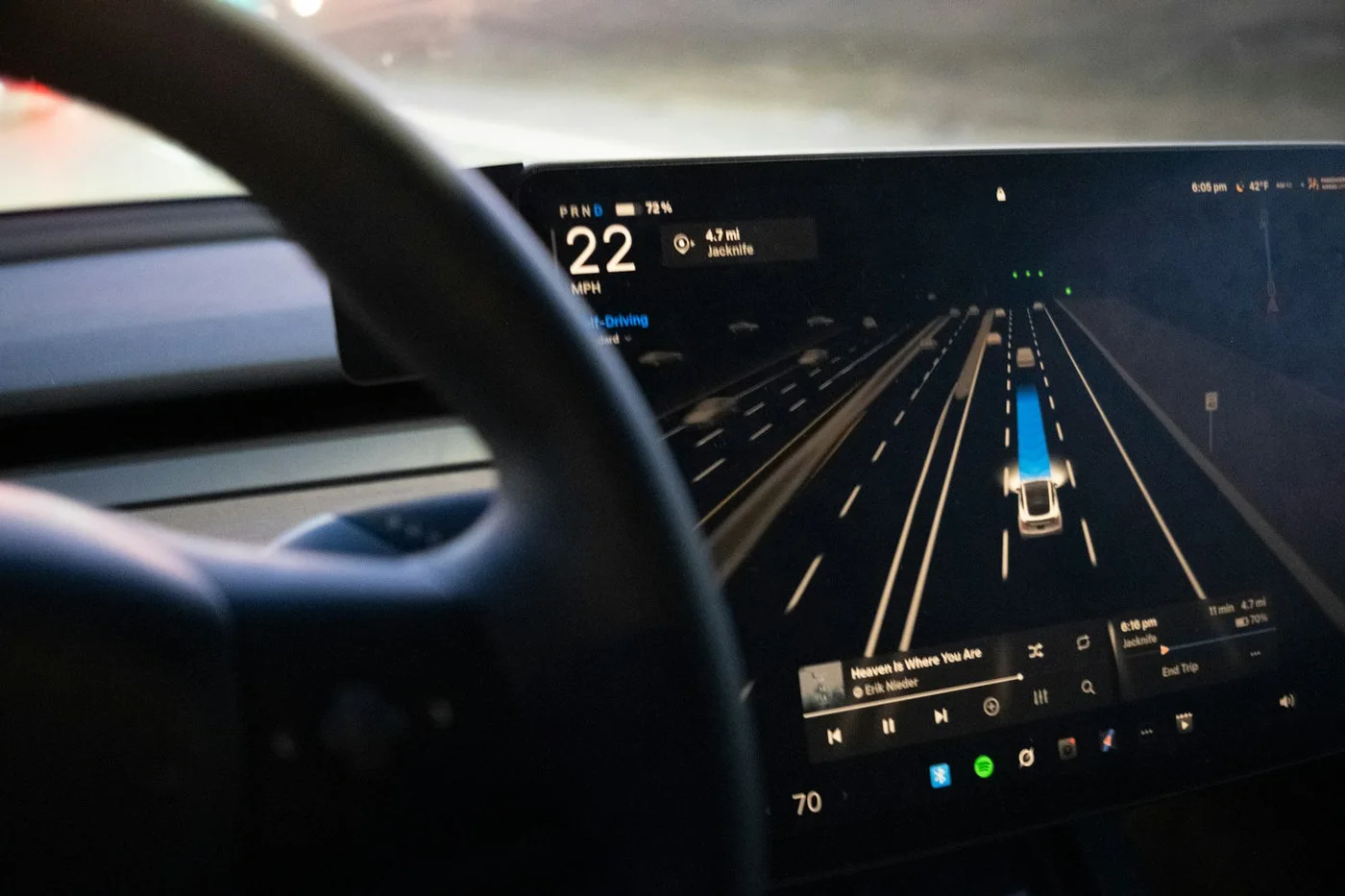
Autonomous vehicle simulation is a virtual environment in which automated-driving software interacts with digital roads, vehicles, pedestrians, cyclists, infrastructure, weather, lighting, and sensor inputs. Engineers can define a scenario, repeat it, vary its parameters, and compare vehicle behavior against explicit requirements without waiting for a physical prototype or a rare real-world event.
A useful simulator contains more than a convincing city. It combines road networks, traffic behavior, vehicle dynamics, sensor models, environment controls, scenario logic, and interfaces to the software or hardware under test. Fidelity should follow the question. Route planning may require realistic traffic choices but modest rendering; camera perception may require accurate materials, shadows, glare, rain, occlusion, lens behavior, and noise.
Simulation belongs inside a verification system, not beside it as a demo. Teams connect scenarios to requirements, expected outcomes, versions, defects, and release gates. Results must be reproducible. When a run fails, engineers need enough telemetry to separate a stack defect from a vehicle-model, environment, scenario, or simulator problem.
Mimic Mobility’s 3D simulation services emphasize photorealistic environments, interactive visualization, training, and integration. Its automotive simulation and virtual prototyping guide explains how virtual models support decisions before physical systems are complete.
The business benefit is earlier learning. Virtual tests can start while vehicles, sensors, ECUs, or roads are evolving, enabling parallel development and faster regression. Simulation does not eliminate physical testing; it reserves costly prototypes and tracks for questions that genuinely need them.
Why Scenario-Based Simulation Matters

Public-road driving has a long tail. Most kilometers are routine, while serious risk appears in rare combinations: low sun behind a pedestrian, a partly hidden cyclist, confusing markings, debris, an emergency vehicle, a cut-in during rain, or a sensor degraded by dirt. Encountering every important combination naturally would be slow, unpredictable, and dangerous.
Scenario-based testing turns that open problem into a structured test space. A scenario describes the road, actors, initial states, actions, environment, vehicle configuration, and success criteria. Speed, distance, lighting, friction, traffic density, pedestrian behavior, and sensor noise can be varied systematically. One base scenario may yield thousands of meaningful cases.
This method supports several goals:
Requirements verification linked to measurable pass criteria.
Regression testing after software, model, map, or hardware changes.
Boundary discovery near the point where acceptable performance breaks down.
Rare-event exploration without exposing people to unnecessary risk.
Human-factors evaluation of warnings, handovers, explanations, and attention.
Strong libraries combine road logs, incidents, near misses, safety analysis, standards, expert cases, synthetic generation, and operational feedback. The guide to traffic simulation data and collection covers counts, speeds, routes, maps, signals, and observed behavior. The article on synthetic data for mobility AI validation explains why generated data must remain traceable and reality checked.
Coverage should not be reported as virtual kilometers alone. A billion easy kilometers can add less evidence than a carefully designed high-risk set. Better measures include requirements covered, parameter ranges, scenario diversity, behavioral classes, pass/fail boundaries, regression stability, and correlation with physical tests.
The Simulation and Validation Stack

No single environment answers every autonomous-driving question. Mature programs use layers so fast, inexpensive tests run frequently and higher-fidelity tests are applied where their evidence justifies the cost. Layers should share scenario definitions, interfaces, logs, and traceability where practical.
Model-in-the-loop and software-in-the-loop. Algorithms or production software run against virtual vehicle and environment models. These tests are fast, automatable, and suited to parameter sweeps, logic, planning, controls, regression, and continuous integration. Hardware timing and behavior may remain simplified.
Hardware-in-the-loop. Real ECUs, sensor-processing units, or network components receive simulated inputs. This exposes timing issues, protocol errors, resource limits, and hardware-dependent behavior. Because it costs more than pure software testing, teams normally select focused scenario suites.
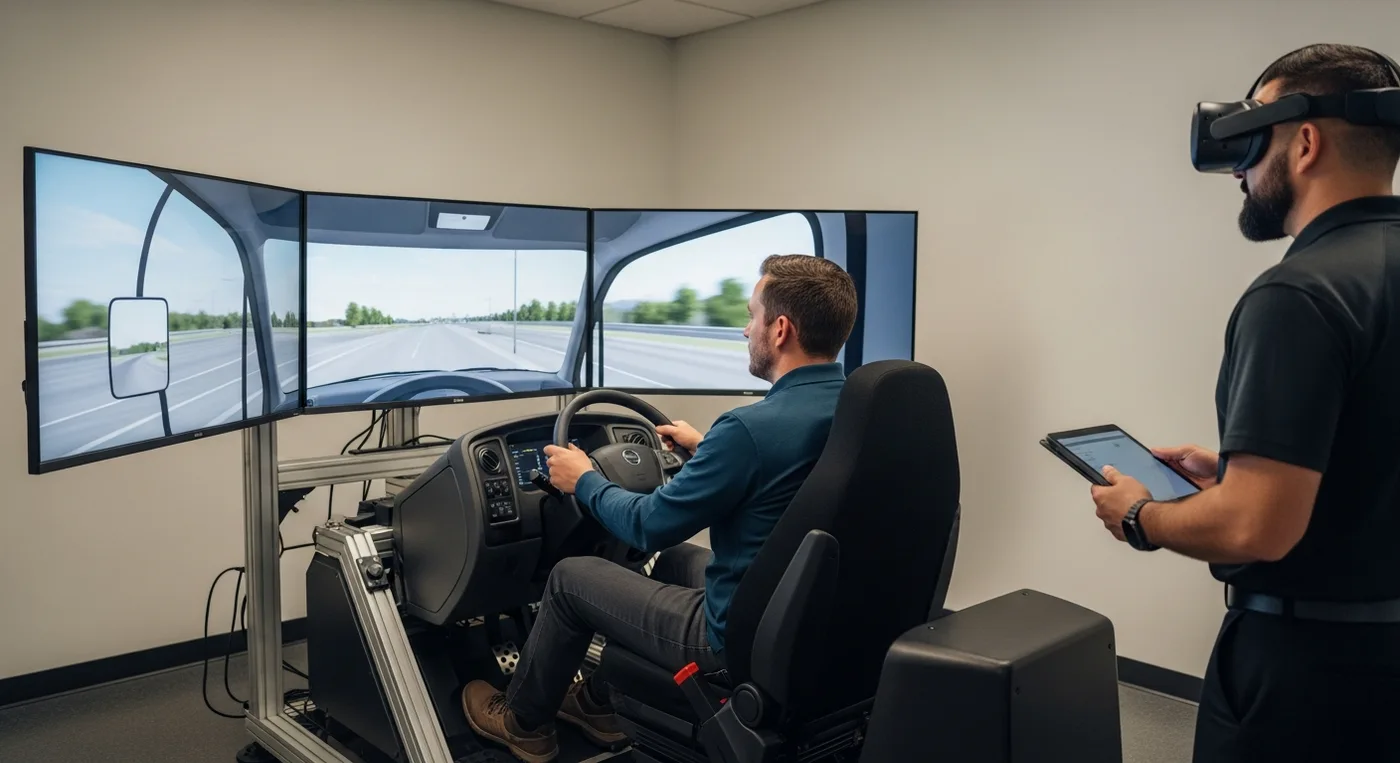
Driver- and vehicle-in-the-loop. A human or physical vehicle participates while selected inputs remain simulated. These setups support handover, HMI, driver monitoring, dynamics, and integration. Mimic Mobility’s work on automotive HMI testing for AI assistants shows why interface behavior must be evaluated with workload and road context.
Proving ground and public road. Closed tracks validate physical behavior under controlled safety procedures. Road pilots reveal infrastructure variation, social interaction, local culture, maintenance realities, and unknown unknowns. Physical evidence also calibrates models and quantifies the reality gap.
A digital thread connects the layers. A scenario keeps a stable identity, each test records software and model versions, telemetry uses comparable signals, and results enter a shared evidence store. A road event can then be reproduced virtually, varied, fixed, regression tested, and confirmed on hardware or track.
Mobility digital twins for transit operations extend the same discipline across vehicles, passengers, infrastructure, and service decisions. Calibration, versioning, scenario control, and outcome measurement distinguish a decision-support twin from a decorative model.
How to Build a Useful Scenario Library

A scenario library is a governed engineering asset. Without ownership and structure, it becomes a folder of demos that cannot support release decisions. Start by defining the operational design domain: road types, geography, weather, lighting, speed, rules, infrastructure, and other conditions within which the function is intended to operate.
Create a taxonomy that reflects risk and behavior. Useful dimensions include maneuver, road geometry, actor type, interaction, environment, sensor challenge, vehicle state, localization condition, communication state, and fallback. Keep it stable enough for reporting but flexible enough for new hazards and markets.
Every testable scenario should state its purpose and linked requirement; initial conditions, actors, actions, environment, and parameters; system version, vehicle configuration, sensors, and map data; observable pass, fail, warning, or inconclusive criteria; and the evidence needed for reproduction and review.
Use a funnel instead of brute force. Begin with broad exploration, then concentrate compute around failures, near misses, discontinuities, and uncertain boundaries. Combinatorial sampling, importance sampling, optimization, and search-based testing can expose critical combinations more efficiently than uniform random variation.
Validate realism against measured references. Compare traffic flow, actor decisions, sensor outputs, dynamics, and environmental effects. Document calibrated aspects and assumptions. If a model is valid only for a speed range, weather condition, or sensor generation, encode that boundary in the evidence.
Govern changes like software: review new scenarios, version definitions, record sources and licenses, prevent duplicates, retain history, and maintain a small release-gate suite beside larger exploratory libraries. Security and privacy reviews matter when data contains cameras, locations, passengers, or fleets. The goal is balanced, explainable evidence, not maximal quantity.
Choosing Vehicle Simulation Software and a Rollout Plan

Vehicle simulation software should be selected against evidence needs, not the longest feature list. Perception, controls, HMI, and operations teams may all say simulation while requiring different fidelity, interfaces, workflows, and scale.
Begin with representative benchmarks: one normal case, one adverse environment, one dense multi-actor interaction, one sensor or connectivity degradation, and one regression from an actual defect. Measure setup effort, execution speed, determinism, diagnostic quality, integration work, and reviewability.
Evaluate these dimensions:
Scenario authoring, reusable components, maps, parameterization, and standards.
Vehicle physics; camera, lidar, radar, GNSS, weather, materials, noise, and documented model limits.
APIs, co-simulation, middleware, ECU interfaces, pipelines, CI/CD, and test management.
Local and cloud scale, parallel execution, deterministic seeds, version control, and cost controls.
Synchronized telemetry, pass criteria, traceability, access control, audit logs, and evidence retention.
Support, roadmap, licensing, security, data ownership, ecosystem, and exportability.
Roll out in phases. Define one high-value workflow and baseline; build a minimum validated environment and small suite; integrate the software under test and automate results; correlate selected cases with logs, hardware, or track tests; then expand only after reproducibility and governance work.
Common failures include chasing photorealism without validation goals, automating unstable scenarios, measuring only mileage, underestimating data work, and treating outputs as self-validating. Isolating simulation specialists from safety, software, HMI, test, and operations teams is equally risky.
For a visual and technical partner, Mimic Mobility combines real-time 3D, simulation, digital humans, and mobility experience. Explore its technology capabilities and transport simulation software guide to frame an initial scope around a decision, test workflow, or training objective.
Frequently Asked Questions
What is autonomous vehicle simulation?
It is the virtual testing of automated-driving software, sensors, vehicle behavior, traffic, roads, weather, and edge cases. It allows controlled, repeatable tests before track or public-road deployment.
Can simulation replace real-world testing?
No. Simulation expands coverage and finds defects earlier, but it must be correlated with hardware, proving-ground, vehicle, and carefully governed road testing.
What is scenario-based testing?
It defines a road situation, actors, environment, vehicle state, expected behavior, and pass criteria, then varies parameters to test normal and rare conditions.
What is the difference between SIL and HIL?
Software-in-the-loop runs control software against virtual models for fast, scalable testing. Hardware-in-the-loop connects real ECUs or hardware to simulated inputs and exposes timing and interface issues.
How realistic must a simulator be?
Fidelity should match the decision. Planning tests need credible traffic behavior; perception tests may require calibrated sensors, materials, weather, noise, and lighting. Visual detail alone is not validation.
What data is needed for scenarios?
Sources include road geometry, maps, traffic observations, incident records, telemetry, sensor logs, weather, operational reports, and expert-defined hazards. Data should be traceable and bias reviewed.
How is synthetic sensor data validated?
Teams compare synthetic and measured outputs, examine distributions and failures, tune models, and document the remaining reality gap. Generated data is evidence with limits, not automatic truth.
Which metrics matter?
Track requirements and scenario coverage, pass rates, near misses, false positives and negatives, intervention triggers, regression stability, reproducibility, compute cost, and correlation with physical outcomes.
How should teams choose vehicle simulation software?
Benchmark representative scenarios and assess fidelity, standards, integrations, automation, determinism, scalability, reporting, security, support, data ownership, and total operating cost.
How can Mimic Mobility help?
Mimic Mobility combines real-time 3D environments, mobility simulation, visualization, digital-human expertise, and integration support for scenarios, interfaces, training, and validation experiences.
Conclusion
Autonomous vehicle simulation turns difficult road-testing questions into repeatable engineering experiments. Its strength comes from scenario quality, calibrated models, layered physical validation, and traceable evidence—not visual polish or virtual mileage alone. Teams that connect simulation to requirements, defects, hardware, tracks, and operational feedback learn earlier while using scarce physical resources intelligently.
Ready to plan an autonomous vehicle simulation or scenario-validation program? Explore Mimic Mobility’s 3D simulation services or contact the Mimic Mobility team to discuss a photorealistic environment, vehicle simulation workflow, HMI study, digital twin, or mobility training experience.