How can automotive AI become genuinely useful without distracting drivers or compromising trust?
Automotive AI is moving from isolated voice commands to context-aware agents that can understand intent, coordinate vehicle functions, personalize the cabin, and support passengers throughout a journey. The opportunity is substantial, but a polished demo is not the same as a production system.
This guide explains where automotive AI creates value, how an in-vehicle agent should be designed, which safety and privacy controls matter, and how mobility teams can move from prototype to a measurable rollout. It is written for automotive OEMs, suppliers, transit operators, product leaders, and experience teams planning the next generation of intelligent mobility interfaces.
Table of Contents
What Automotive AI Means in Practice
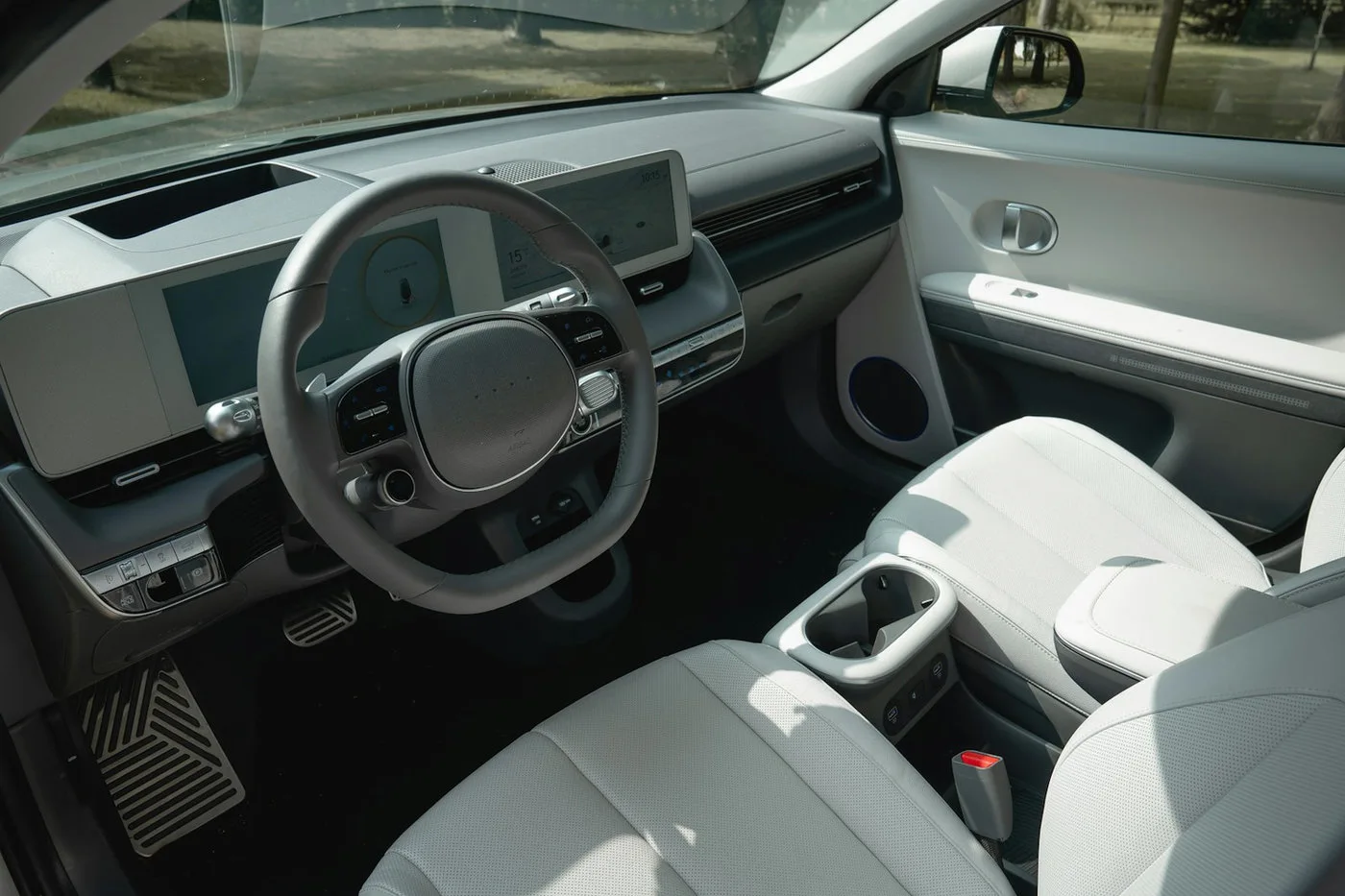
Automotive AI is the use of machine learning, conversational systems, perception technology, and decision support across the vehicle lifecycle and travel experience. It includes engineering applications such as simulation and validation, operational applications such as predictive diagnostics, and customer-facing applications such as intelligent cabin assistants.
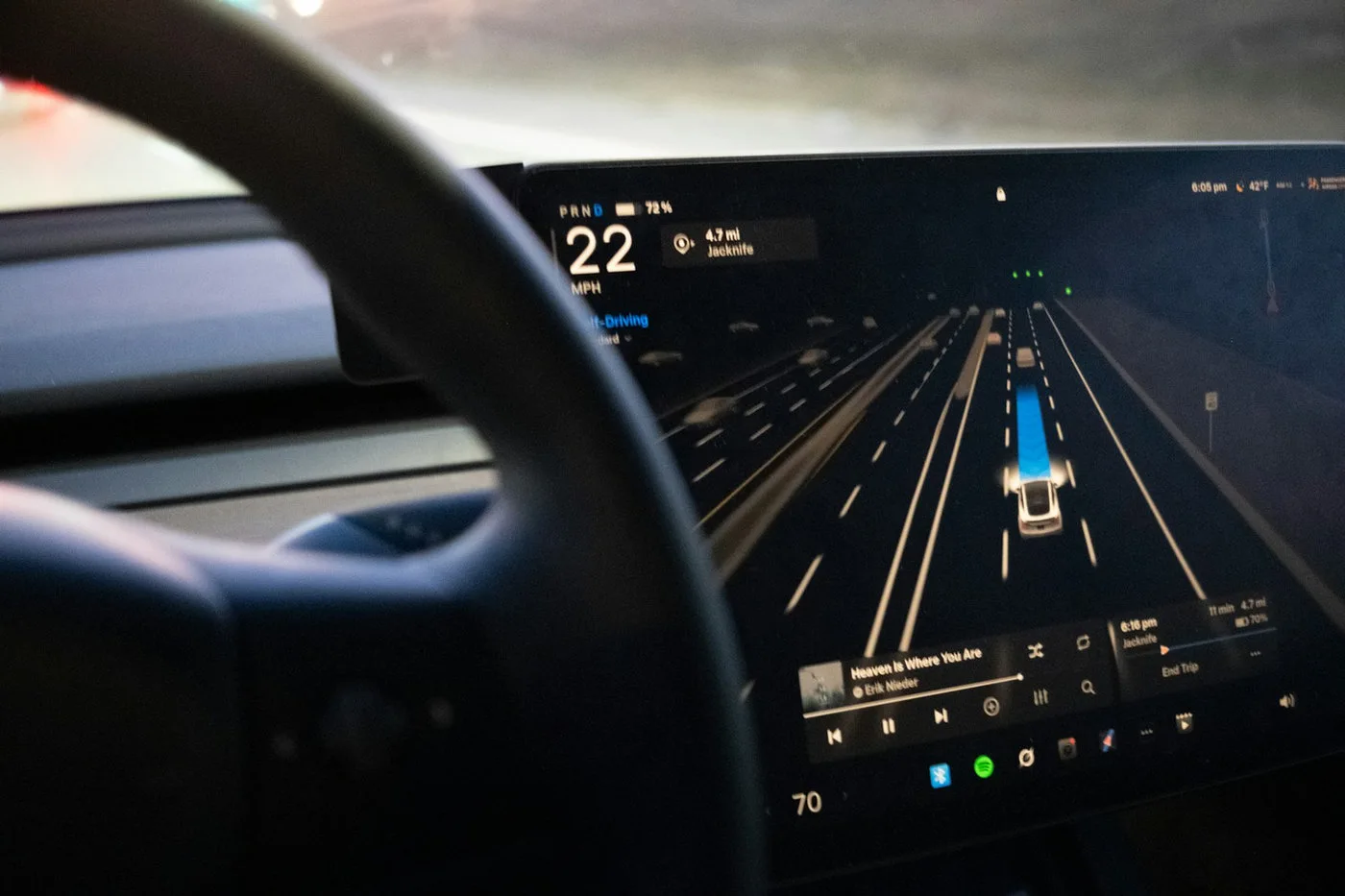
For passengers, the most visible form is an in-vehicle agent. Unlike a conventional voice menu, an agent can maintain context across a conversation, connect a request to live vehicle or journey data, and complete a task through approved systems. A passenger might ask why charging will take longer today, request an accessible route, change the cabin temperature, or find a safe rest stop without navigating several screens.
The goal is not to make the vehicle conversational for its own sake. The goal is to reduce friction while keeping attention on the road. That requires a deliberately designed interface, clear permissions, predictable behavior, and graceful handoff when the system is uncertain.
Mimic Mobility’s AI avatar and intelligent-assistance services combine conversational AI with expressive digital characters and real-time interfaces. The same experience layer can be evaluated alongside automotive HMI testing so that usefulness, comprehension, and distraction are measured before deployment.
A strong automotive AI program therefore spans five connected layers:
The experience layer: voice, visual, avatar, touch, and accessibility design.
The intelligence layer: intent recognition, dialogue, reasoning, personalization, and retrieval.
The vehicle layer: approved access to navigation, climate, charging, diagnostics, and infotainment.
The trust layer: consent, identity, privacy, safety constraints, and audit logs.
The operations layer: monitoring, evaluation, updates, escalation, and continuous improvement.
Where Automotive AI Creates Value

The best use cases begin with a recurring customer or operator problem, not with a model capability. Teams should prioritize moments where the agent can save time, reduce cognitive load, improve accessibility, or prevent an avoidable service failure.
Intelligent journey assistance. An automotive AI agent can combine route, traffic, weather, charging, and vehicle-status data to answer questions in plain language. It can explain a reroute, compare charging stops, or warn that current range is insufficient. This builds on the connected-data approach described in Mimic Mobility’s guide to AI navigation assistants.
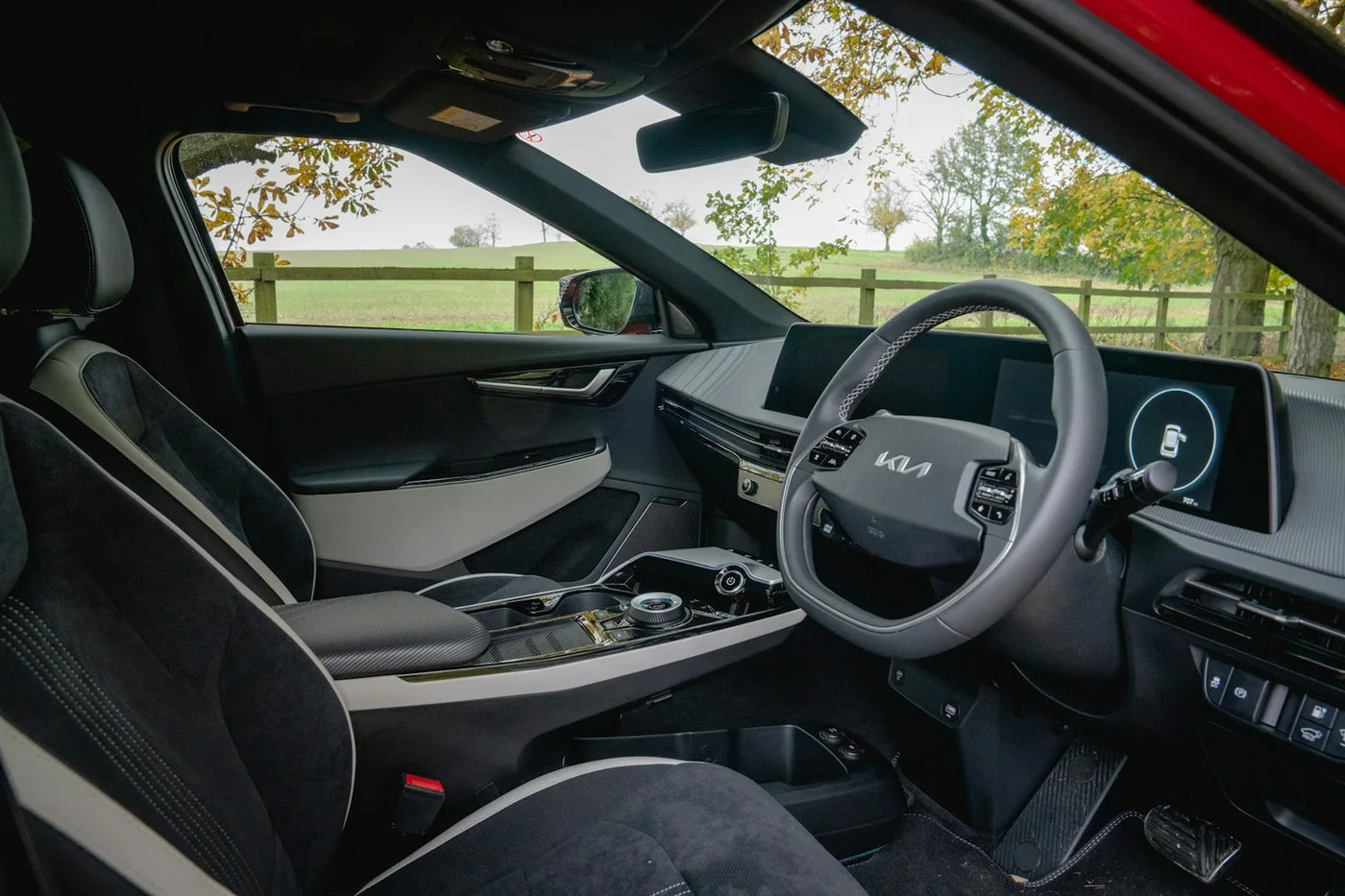
Cabin personalization. With explicit consent, the agent can remember preferred temperature, seat position, media, language, accessibility settings, and interaction style. Useful personalization is situational: a weekday commute, a family trip, and a late-night drive should not trigger identical suggestions. The system should explain why it made a recommendation and allow the user to reset or disable memory.
Customer support and diagnostics. The assistant can translate a warning light into understandable next steps, retrieve manual information, schedule service, or escalate to a human. It must distinguish between general guidance and safety-critical instructions. For fleet contexts, it can also surface relevant information from predictive maintenance workflows without overwhelming the driver.
Accessible mobility. Multilingual speech, captions, simplified language, visual avatars, and multimodal controls can make travel easier for people with different sensory, cognitive, or language needs. Similar principles apply beyond private cars, especially in the accessible public-transport experiences where travelers need consistent help across vehicles, apps, stations, and kiosks.
Commercial and brand experiences. Automotive AI can explain vehicle features during onboarding, support test drives, or deliver opt-in recommendations. Brand expression should never obscure the agent’s role. Users must know when content is promotional, which data informs it, and how to decline.
Measure value with task completion, time saved, correction rate, driver-glance behavior, escalation rate, satisfaction, and safety outcomes. Engagement alone is a weak success metric; a verbose assistant can increase interaction while making the journey worse.
How a Production-Ready AI Agent Works
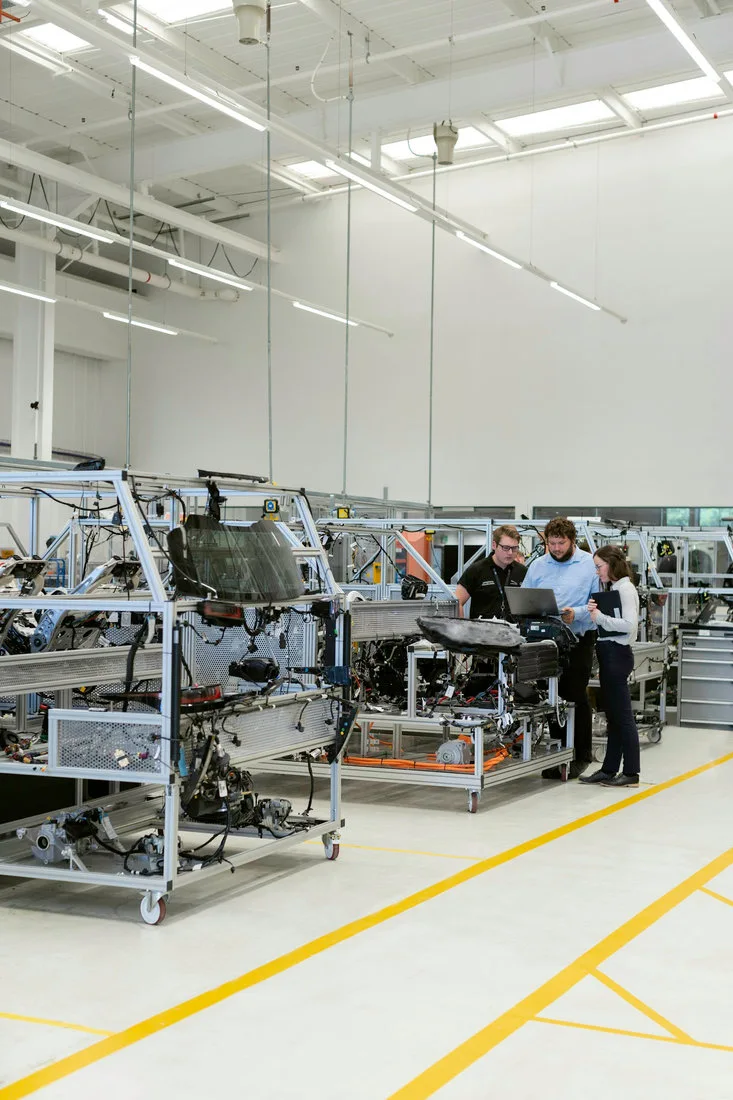
A production agent is an orchestrated system, not a single language model. The user interface captures voice, text, touch, gaze, or other permitted signals. An intent layer determines what the person wants. A policy layer decides whether the request is allowed. Approved connectors retrieve vehicle, route, service, or account data. Only then does the system formulate a response or execute an action.
This separation matters because vehicle actions have different risk levels. Asking for nearby charging stations is not equivalent to changing a driver-assistance setting. Low-risk tasks can be automated with confirmation rules, while higher-risk tasks may require the vehicle to be stationary, a second confirmation, or complete prohibition.
A robust architecture normally includes:
On-device processing for wake words, basic commands, privacy-sensitive inputs, and degraded connectivity.
Cloud intelligence for broader language understanding, retrieval, and frequently updated services.
A governed tool layer that exposes only approved actions with strict input validation.
A curated knowledge layer for manuals, policies, service information, and model-specific facts.
Telemetry and evaluation pipelines that record outcomes without collecting unnecessary personal data.
A fallback layer for safe refusal, offline behavior, human support, and emergency boundaries.
Response design is equally important. The agent should be concise while the vehicle is moving, use visual information sparingly, and defer nonessential details. It should confirm consequential actions, identify uncertainty, and avoid pretending it completed a task when a connected service failed.
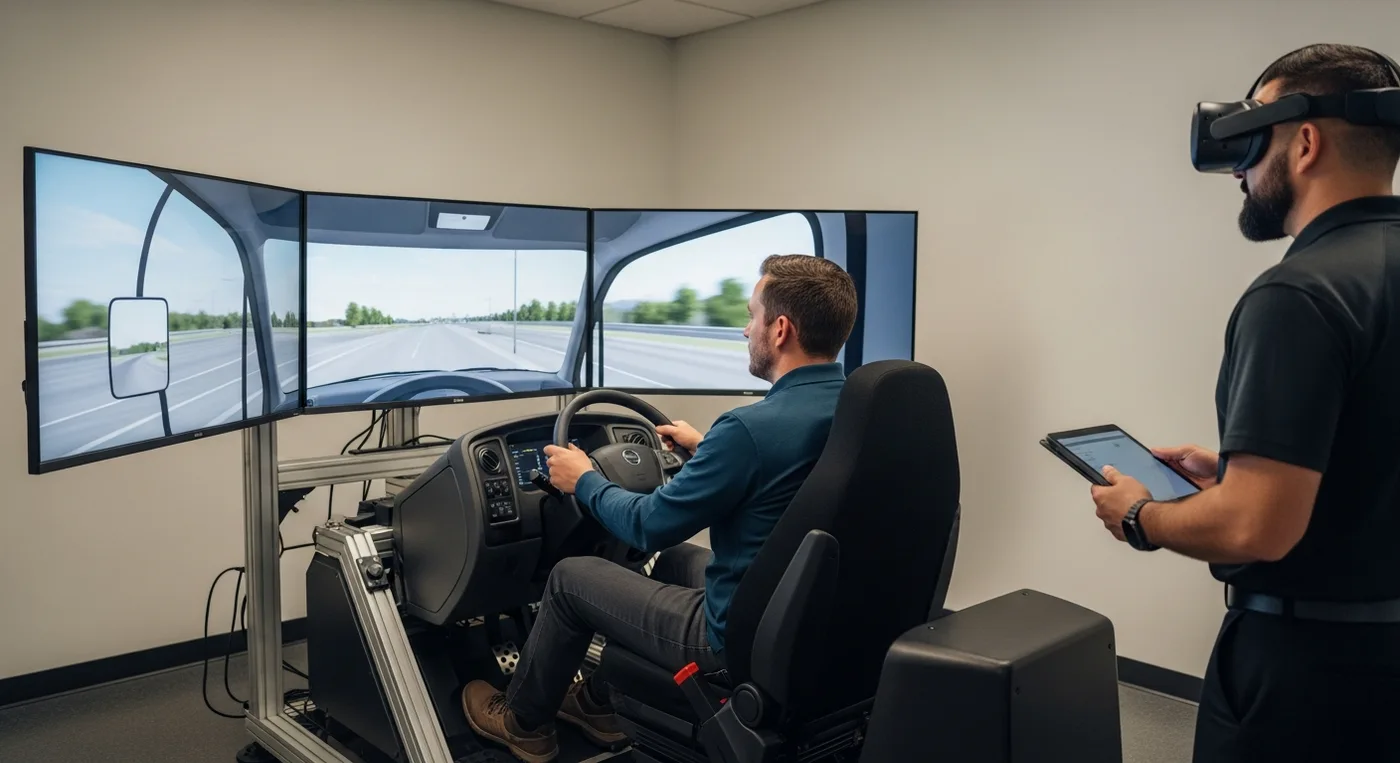
Before road testing, teams can evaluate conversations, cabin layouts, alert timing, and edge cases in 3D simulation environments. Mimic Mobility’s automotive simulation and virtual prototyping guide outlines how realistic scenarios support earlier iteration. Synthetic scenarios can expand coverage, but they should complement—not replace—real user research and validated test data.
The final requirement is observability. Product teams need to know which intents fail, where latency appears, which tools return errors, when users interrupt the system, and whether an update changes safety-relevant behavior. Versioned prompts, policies, models, knowledge sources, and connectors make incidents reproducible.
Safety, Privacy, and Human Trust

Trust is not a tone-of-voice setting. It comes from predictable behavior, visible limits, respectful data practices, and evidence that the interface supports rather than competes with the driving task.
Design for attention. Use short spoken responses during motion, suppress nonessential prompts in demanding conditions, and avoid making the driver read dense text. Critical warnings must remain distinct from conversational content. Eye tracking, usability testing, and scenario-based evaluation can reveal when the agent adds cognitive load; Mimic Mobility’s broader mobility technology capabilities include human-sensing methods relevant to this work.
Minimize and separate data. Collect only what a defined feature needs. Separate identity, vehicle telemetry, conversation content, and analytics wherever practical. Make retention periods explicit. A rental car, shared fleet vehicle, and personally owned vehicle require different defaults because the meaning of “the user” changes.
Make consent reversible. Drivers and passengers should be able to see what is remembered, delete it, disable personalization, and use core functions without surrendering unrelated data. Microphone and camera states must be visible. Sensitive inferences—health, emotion, identity, or location patterns—require especially careful justification and controls.
Constrain generation. Safety-critical answers should come from approved knowledge and deterministic rules, not unconstrained improvisation. Retrieval sources should be model- and market-specific. When the system lacks reliable information, it should say so and direct the user to an appropriate source or human channel.
Secure every connector. Authenticate the user and vehicle, authorize each tool action, validate parameters, rate-limit requests, encrypt data, and log consequential operations. Treat content from messages, calendars, the web, and third-party services as untrusted input. An agent must not let hidden instructions inside retrieved content override vehicle policy.
Governance should include threat modeling, privacy impact assessment, red-team testing, accessibility review, incident response, and scheduled reevaluation. Regulations and market requirements vary, so legal and homologation teams should be involved early rather than at the final release gate.
A Practical Automotive AI Rollout Roadmap

A staged program reduces risk and produces better evidence. Start with a narrow workflow that has clear data, a measurable user problem, and safe fallback behavior. Examples include explaining EV range, helping a passenger find a charging stop, answering model-specific manual questions, or guiding a service appointment.
1. Define the job and boundaries. Write the user job in one sentence, list permitted and prohibited actions, identify required data, and specify what happens when systems are offline or uncertain. Establish baseline metrics from the current experience.
2. Prototype the interaction. Create representative dialogues for normal, ambiguous, adversarial, and accessibility scenarios. Test voice, visual, and avatar behaviors with target users. Decide which information must appear, which can be spoken, and what should wait until the vehicle stops.
3. Build governed integrations. Connect only the minimum services needed for the first workflow. Use test accounts and simulated vehicle data. Add permission checks, confirmations, timeouts, and structured error responses before adding broader model capability.
4. Validate in simulation. Run repeatable scenarios for traffic, weather, noise, connectivity loss, multiple passengers, conflicting requests, and unusual vehicle states. Compare results across software versions. For data-hungry perception or mobility models, review the role and limits of synthetic data for validation.
5. Pilot with controlled exposure. Begin with employees or a small opted-in group. Limit geography, vehicle models, languages, and actions. Monitor task success, latency, interruptions, false confirmations, safety events, support contacts, and deletion requests. Give participants a direct way to report failures.
6. Scale through evidence. Expand only when predefined thresholds are met. Add new use cases as separate governed capabilities, not as an unlimited general assistant. Recheck privacy, safety, accessibility, and operational readiness for each market and release.
The right partner can connect digital-human design, conversational behavior, real-time 3D, simulation, and integration into one testable program. Review Mimic Mobility’s background and mobility focus when assessing whether an experience team can support both creative quality and technical validation.
Frequently Asked Questions
What is automotive AI?
Automotive AI applies machine learning, conversational systems, perception, and decision support to vehicle engineering, operations, and customer experiences. Examples include intelligent cabin assistants, predictive diagnostics, virtual testing, personalization, navigation support, and driver-monitoring systems.
How is an automotive AI agent different from a voice assistant?
A basic voice assistant maps commands to predefined functions. An AI agent can maintain conversational context, retrieve approved live data, coordinate several tools, explain outcomes, and adapt its response. Production agents still need strict permission boundaries and safe fallbacks.
Can automotive AI control vehicle functions?
It can control specifically approved functions when the vehicle architecture, market rules, and safety design allow it. Low-risk cabin functions may be suitable, while safety-critical controls need stronger restrictions, confirmation, or exclusion.
Does an in-car AI assistant require a constant internet connection?
Not necessarily. A hybrid design can keep wake words, essential commands, privacy-sensitive processing, and offline fallbacks on the vehicle while using cloud services for richer language and current external data.
How can automotive AI reduce driver distraction?
It can replace multi-step screen navigation with concise voice interaction, anticipate relevant information, and delay nonessential content. The interface must be tested for glance behavior, cognitive load, interruptions, and demanding road conditions.
What data should an automotive AI assistant collect?
Only data required for a defined feature. Teams should document purpose, retention, access, sharing, and deletion for conversation data, identity, preferences, location, vehicle telemetry, and analytics. Shared vehicles require particularly careful defaults.
How should automotive AI be tested before launch?
Use layered testing: unit and integration tests, curated conversation evaluations, security and privacy testing, accessibility studies, simulated driving scenarios, closed-course testing, and limited real-world pilots. Version every model, prompt, policy, and data source.
What automotive AI use case should a company start with?
Choose a frequent, bounded problem with reliable data and a measurable baseline—for example, EV range explanation, charging-stop support, manual guidance, or service scheduling. Avoid beginning with an unrestricted general agent.
Can AI avatars improve the in-vehicle experience?
Yes, when the avatar provides useful social and visual cues, supports accessibility, and remains unobtrusive. Its expression, gaze, timing, and visual prominence should be validated so it does not increase distraction or imply capabilities the system lacks.
How do companies measure automotive AI success?
Track task completion, time saved, correction and escalation rates, latency, interruption patterns, comprehension, satisfaction, accessibility outcomes, safety indicators, and privacy requests. Engagement time alone can reward unnecessarily talkative behavior.
Conclusion
Automotive AI can make vehicles and connected journeys more understandable, personalized, and accessible. The winning systems will not be the ones that talk the most. They will be the ones that complete valuable tasks, stay within clear boundaries, protect user data, and behave predictably when conditions become complex.
Ready to prototype a trusted automotive AI experience? Explore Mimic Mobility’s AI avatar services or contact the Mimic Mobility team to plan an in-vehicle assistant, simulated validation program, or connected passenger experience.