
How can an ADAS team prove a driver-assistance function is ready for the road without waiting for every dangerous edge case to happen in real traffic?
ADAS simulation gives engineering teams a repeatable way to test perception, planning, control, and human interaction inside controlled virtual environments. It complements proving-ground and public-road testing by exposing a system to many more combinations of traffic, weather, road geometry, sensor conditions, and driver behavior than physical testing alone can practically cover.
This guide turns that idea into a practical validation plan. It explains how to define the operational design domain, build meaningful scenarios, choose model-, software-, hardware-, or driver-in-the-loop stages, validate sensor realism, select pass/fail metrics, and assemble traceable evidence. For broader context, explore Mimic Mobility’s 3D simulation capabilities and its autonomous vehicle simulation guide.
Table of Contents
What ADAS Simulation Needs to Prove

A useful ADAS simulation is not a cinematic demonstration. It is an instrumented experiment with a defined system under test, controlled inputs, measurable outputs, and a reason for every scenario. The team should know which requirement is being exercised, what behavior is expected, which signals are recorded, and what constitutes a pass, fail, or inconclusive result.
Separate the layers of the system. Perception tests ask whether camera, radar, lidar, ultrasonic, or fused inputs detect and classify relevant objects. Decision tests examine whether the function selects a safe response. Control tests measure braking, steering, acceleration, stability, and comfort. HMI tests evaluate whether warnings, requests to intervene, and mode changes are timely and understandable.
That separation matters because one end-to-end failure can have several causes. A late emergency-braking response may result from missed detection, uncertain classification, a planning threshold, actuator delay, or an unclear handover. Mimic Mobility’s guide to automotive HMI testing shows why the person behind the wheel must remain part of the validation argument.
Use a layered strategy. Unit tests protect individual functions. Virtual scenarios explore combinations quickly. Closed-course tests validate integrated behavior under controlled physical conditions. Carefully governed road tests confirm performance in representative reality. Each layer answers different questions, and none is a universal replacement for the others.
Define the ODD and Test Objectives

An operational design domain, or ODD, describes the conditions in which an automated or assisted-driving feature is intended to work. Even a Level 2 function needs explicit boundaries. Road type, lane markings, speed range, geography, lighting, precipitation, visibility, traffic density, construction zones, vehicle state, sensor health, and driver availability can all change expected behavior.
Turn the ODD into a structured test matrix. Define useful classes for each variable: dry, wet, snowy, or contaminated road; daylight, dusk, night, glare, or tunnel; sparse, moderate, or dense traffic; clear, worn, temporary, or missing lane markings. Then identify boundaries where the feature should degrade gracefully, warn the driver, transfer control, or become unavailable.
Link every test objective to a requirement and an observable outcome.
Include nominal behavior, boundary behavior, degraded modes, misuse, and recovery.
Specify initial conditions, trigger events, actors, timing, and expected end state.
Record the software build, calibration, map and model versions, random seed, and simulator configuration.
Define tolerances before execution so results are not judged retrospectively.
ODD work benefits from realistic operational data. The guide to traffic-simulation data collection explains how geometry, counts, probe feeds, and validation checks improve credibility. The goal is not perfect visual detail everywhere; it is accurate representation of variables that materially influence the tested function.
Build a Scenario Library That Finds Risk

Scenario-based testing turns the ODD into executable situations. Begin with functional scenarios in plain language, such as a pedestrian emerging from behind a parked van. Add logical ranges for speed, distance, weather, clothing contrast, road curvature, and braking friction. Concrete scenarios then assign exact values and a reproducible seed for execution.
A balanced library needs more than rare catastrophes. Include common nominal situations to catch everyday regressions, boundary cases near activation thresholds, known hazardous events, plausible misuse, sensor degradation, and combinations that challenge several subsystems. Near-misses and interventions from real fleets are valuable seeds, but generalize them into scenario families rather than replaying each only once.
Parameter variation should be purposeful. Brute-force grids grow rapidly and waste compute on redundant or impossible cases. Use requirement partitions, pairwise combinations, sensitivity analysis, search-based generation, and importance sampling to focus on decision boundaries and severe outcomes. When a failure appears, shrink it to a simple reproducible case, then expand locally to map the unsafe region.
Synthetic data can enlarge the long tail when real examples are scarce, especially for unusual actors, occlusion, lighting, and weather. Document how it was created, which distributions it represents, and where it is not trustworthy. See Synthetic Data for Mobility AI for a complementary governance workflow.
Choose the Right xIL Test Stage

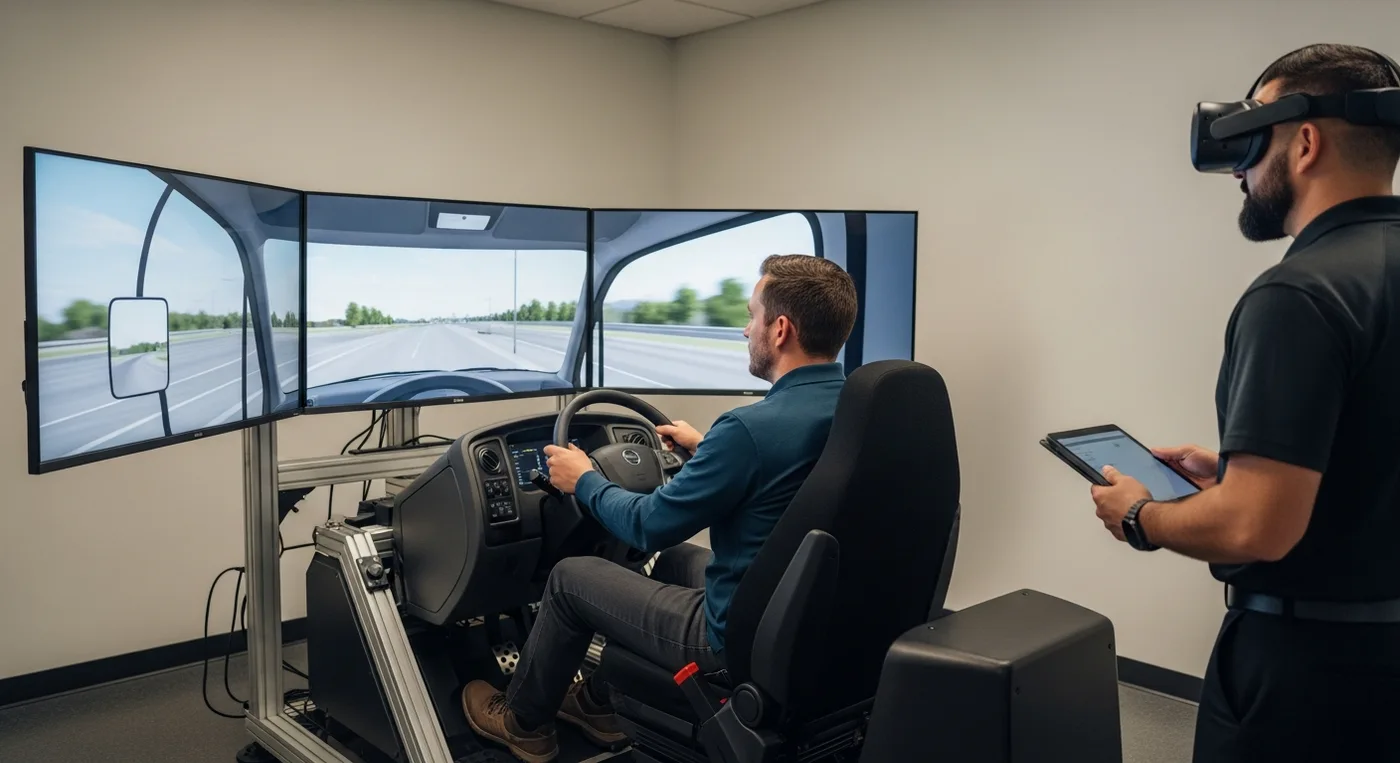
An efficient ADAS program moves tests through several x-in-the-loop stages. Model-in-the-loop evaluates logic early, when changes are inexpensive. Software-in-the-loop executes production-intent code against virtual vehicles, sensors, and environments. Hardware-in-the-loop connects real ECUs or processing hardware to a simulated world. Driver-in-the-loop adds a human to assess attention, trust, comfort, and takeover behavior.
Do not send every scenario to every stage. Fast software-in-the-loop farms suit large regression suites and parameter sweeps. Hardware-in-the-loop should focus on timing, interfaces, compute load, communication faults, and actuator behavior that software alone cannot represent faithfully. Driver-in-the-loop is valuable for warnings, mode confusion, workload, and controllability. Physical vehicles remain essential for correlation and discovering new phenomena.
Create promotion gates. A feature should not enter a more expensive stage until lower-cost checks pass, known model limits are documented, and required logging is available. Failures found on a track or road should feed back into the virtual library as reproducible cases, creating one closed learning loop.
Mimic Mobility’s technology services combine real-time 3D, motion capture, eye tracking, facial tracking, and scanning. Those capabilities help when a test includes human behavior, cockpit interaction, realistic assets, or detailed environments—not only vehicle dynamics.
Validate Sensors and Environment Fidelity

Simulation results are only as credible as the models that influence the decision. Sensor models should represent phenomena relevant to the objective: camera exposure, glare, blur, lens effects and rolling shutter; radar multipath and false returns; lidar reflectivity and dropout; mounting tolerances, latency, synchronization, noise, occlusion, and contamination. More detail is not automatically better; required fidelity depends on the failure mechanism.
Correlation keeps fidelity claims honest. Compare simulated outputs with controlled measurements from known targets and physical environments. Use common coordinate frames, calibrated sensor poses, synchronized timestamps, and consistent ground truth. Evaluate not only final detections but intermediate distributions such as range error, angular error, intensity, missed detections, false positives, and latency. When a mismatch matters, update the model and rerun regression tests.
Road geometry, friction, lane reflectivity, traffic behavior, weather, lighting, occlusion, and actor motion also affect outcomes. Maintain a model-assumption register listing every important abstraction, its evidence, owner, and dependent tests. A result may be valid for one claim and insufficient for another.
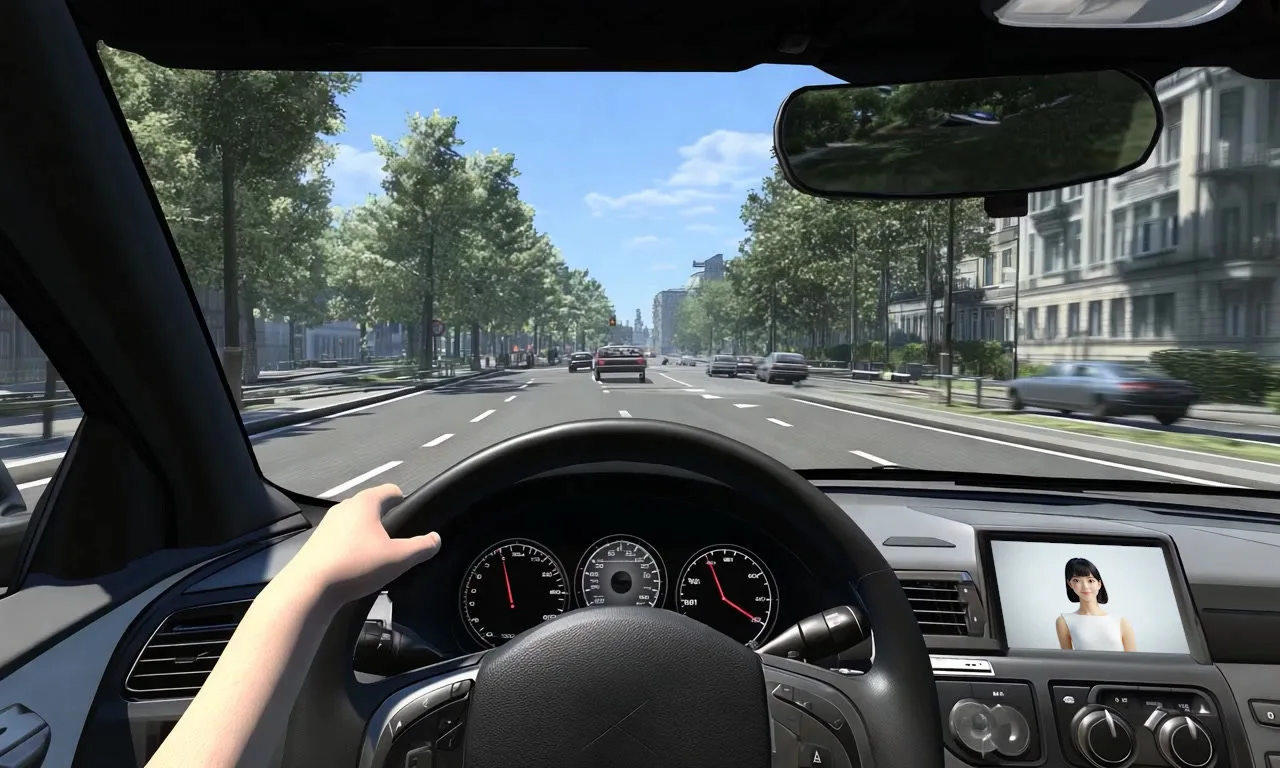
Photorealistic rendering is valuable for camera perception and stakeholder review, while deterministic simplified scenes often suit early logic testing. Mimic Mobility’s 3D simulations service supports virtual prototyping, integration, planning, and realistic test environments tailored to the question under investigation.
Measure Coverage and Release Readiness

Pass counts alone do not prove readiness. A useful dashboard combines requirements coverage, ODD coverage, scenario-space coverage, code or model coverage where relevant, statistical confidence, failure severity, repeatability, and correlation quality. It should show what was tested, what remains untested, and why residual risk is acceptable—or not.
Safety: collision rate, time to collision, minimum separation, impact speed, lane departure, and rule violations.
Function: detection precision and recall, tracking stability, response time, path error, and availability.
Comfort: jerk, deceleration profile, steering smoothness, nuisance warnings, and unnecessary interventions.
Robustness: results across weather, lighting, sensor faults, localization error, latency, and ODD boundaries.
Evidence quality: repeatability, model correlation, provenance, configuration control, and requirement traceability.
Define release criteria before the final campaign. Critical scenarios may require zero unresolved failures, while lower-severity metrics may use confidence intervals and agreed thresholds. Every failure needs triage as a product defect, model defect, test defect, invalid scenario, or known limitation. Preserve logs, metrics, exact configurations, and software artifacts so results can be reproduced.
The safety argument should combine simulation with proving-ground and field evidence. It should also cover the human interface and support ecosystem. For systems with conversational guidance or personalized assistance, review Mimic Mobility’s AI avatar services and its guide to trusted in-vehicle AI agents.
ADAS Simulation FAQs
What is ADAS simulation?
ADAS simulation is controlled virtual testing of driver-assistance functions, including perception, decision, control, vehicle response, sensors, environments, and driver interaction.
Does simulation replace road testing?
No. Simulation expands coverage and repeatability; track and road tests provide physical correlation, environmental evidence, and new situations that feed back into the virtual library.
What is scenario-based ADAS testing?
It organizes validation around defined traffic situations with actors, conditions, triggers, parameter ranges, expected behavior, and measurable verdict criteria.
What is the difference between SiL and HiL?
Software-in-the-loop runs production-intent software against virtual components. Hardware-in-the-loop connects real control hardware or ECUs to the simulated environment to evaluate timing, interfaces, compute, and faults.
How many scenarios are enough?
There is no universal number. Sufficiency depends on requirements, ODD coverage, risk, diversity, model credibility, statistical confidence, and expected release evidence.
How are rare edge cases generated?
Teams combine field events, safety analysis, expert knowledge, parameter variation, search-based generation, synthetic data, and importance sampling to target rare but consequential conditions.
How do you validate a virtual sensor model?
Compare outputs with calibrated physical measurements, evaluate relevant error distributions, document assumptions, and maintain regression tests after every model change.
Which KPIs matter for ADAS simulation?
Common KPIs include collision measures, detection quality, response time, minimum separation, lane error, comfort, nuisance interventions, availability, robustness, and traceable coverage.
What should a test report include?
Include the requirement, scenario, ODD conditions, build and model versions, configurations, seed, logs, KPIs, verdict, known limits, and enough provenance to reproduce the result.
Conclusion
A strong ADAS simulation program begins with explicit claims, not a large scenario count. Define the ODD, connect every test to a requirement, build risk-focused scenario families, choose the right x-in-the-loop stage, validate the models that matter, and measure coverage with transparent release criteria. The result is faster learning, safer physical testing, and an evidence trail that engineering, safety, and management teams can examine together. It also creates a durable regression baseline that teams can reuse after software, sensor, map, or calibration changes.
Talk to Mimic Mobility about a tailored ADAS simulation environment, real-time 3D workflow, virtual prototype, or human-in-the-loop experience. Explore the company’s simulation capabilities or contact the Berlin team to plan a focused validation project.